Short answer: For most dogs in West Chester, PA, a 5- or 6-foot fence in the back yard with a dig guard along the bottom and self-closing gates works well. Jumpers need height, diggers need buried wire or a concrete strip, and small dogs need narrow gaps. Front yards usually cap fences at 3 to 4 feet and require open styles, so plan the dog run in the back.
Every dog owner in West Chester, PA knows which escape their dog prefers. Some go over, some go under, some squeeze through a gap you did not know was there, and some simply wait for a gate left open. The right fence answers your dog’s specific method within the rules your township sets.
- Back yard height: 6 ft is the common residential limit in side and rear yards.
- Front yard: often 3–4 ft and open; West Goshen requires non-solid front fences; Uwchlan caps front yards at 36 inches.
- Diggers: buried wire mesh or a concrete strip along the fence line.
- Gates: self-closing hinges and a latch your dog cannot nose open.
- Before digging: invisible dog fence wire is a private line that 811 does not mark.
How tall should a fence be for a dog?
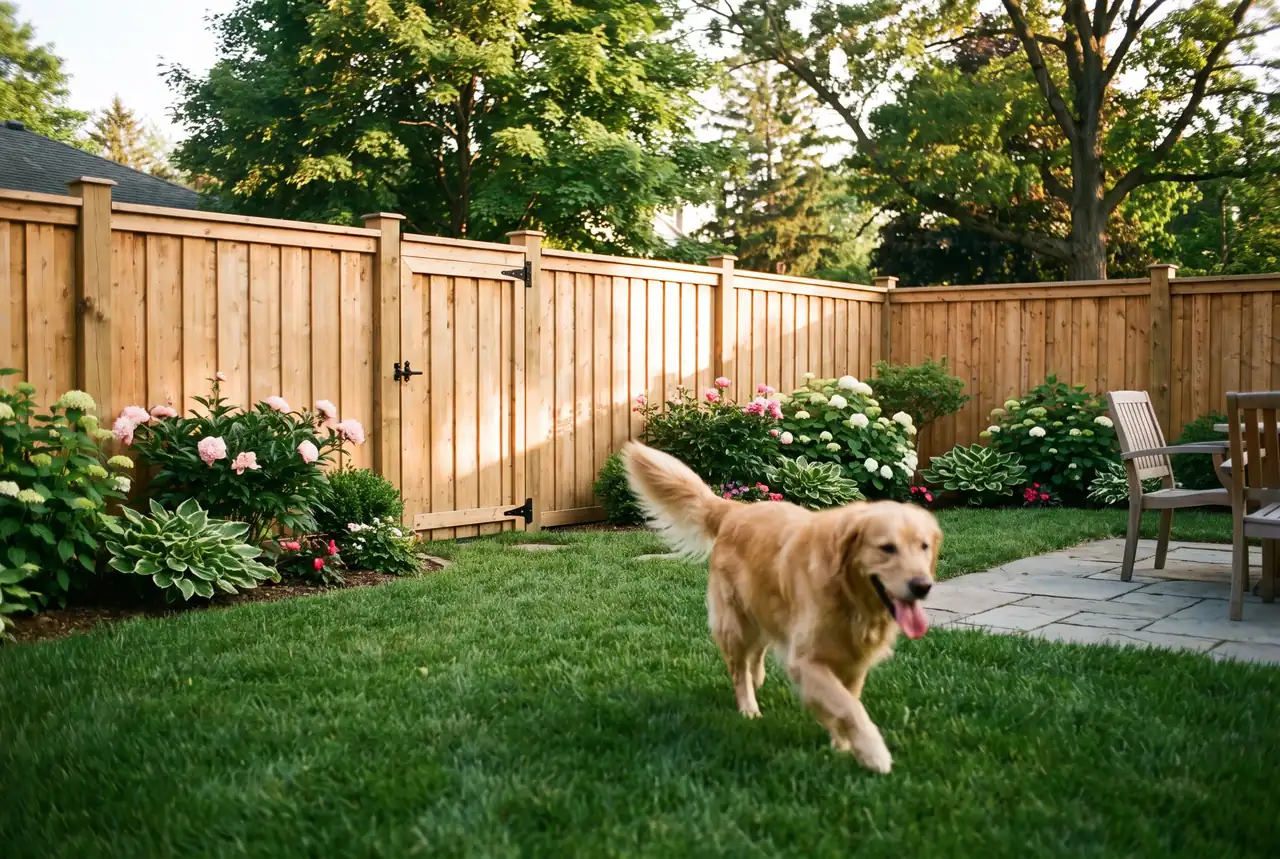
Four feet contains many small and mid-size dogs, 5 feet suits most larger breeds, and 6 feet is the practical answer for athletic jumpers and climbers. Since most townships around West Chester cap side and rear residential fences at 6 feet, that is usually the ceiling. For a determined jumper, a solid privacy fence also helps because the dog cannot see what is on the other side to aim for.
What stops a dog from digging under a fence?
A barrier at or below the ground line. The common options are a strip of welded wire mesh buried along the inside of the fence and attached to the bottom rail, an L-shaped apron of mesh laid flat under the soil, or a narrow concrete or stone mow strip under the fence. Keeping the bottom gap small, a couple of inches at most, removes the easiest starting point.
The jumper
Height first: 5–6 ft, ideally solid. Avoid horizontal rails on the dog’s side that work like a ladder.
The digger
Buried mesh or a concrete strip, plus a tight bottom gap. Check the line monthly at first.
The squeezer
Small dogs fit through picket gaps. Choose narrow spacing, puppy pickets or a mesh backing.
The gate-watcher
Self-closing hinges, a latch out of nose reach, and a gate that cannot be pushed open.
Is aluminum fence strong enough for dogs?
For most dogs, yes. Aluminum is rigid and does not rust, and it suits front yards where open styles are required. Two cautions: standard picket spacing can let small dogs slip through, so ask about narrower spacing or “puppy picket” bottoms, and horizontal rails can help a climber get a foothold. See aluminum fencing for profiles.
Privacy or open fence for a reactive dog?
Privacy, usually. Dogs that bark at passing people, other dogs or deer settle down when they cannot see the trigger. A solid wood or vinyl privacy fence along the street or a busy side reduces fence-running. For calmer dogs, an open fence keeps the view and costs less in many cases.
Can you install a fence if you already have an invisible dog fence?
Yes, but tell the crew where the wire runs. PA One Call marks public utilities, not private lines, so a buried pet containment wire, irrigation line or landscape lighting cable will not be flagged. Augers cut those wires easily. If you plan to keep the electronic system as a backup, mark its path; if you are retiring it, we can work around it. See our 811 guide.
What about front yards and corner lots?
Front-yard rules are strict around West Chester. West Goshen limits front fences to 4 feet and requires them to be non-solid, at least as much open space as structure. Uwchlan caps front yards at 36 inches unless the fence is at least 75 percent open. Corner lots also have sight-triangle rules. That usually means the main dog area belongs behind the house. Our front-yard rules guide compares townships.
What gate setup keeps dogs in?
Most escapes happen at gates. Self-closing hinges, a latch the dog cannot nudge, and a gate frame that does not leave a gap at the bottom or the hinge side handle most of it. A gate that swings into the yard is harder for a dog to push open. Locks keep visitors and service workers from leaving it open; consider a sign as well.
What works on rural or larger lots?
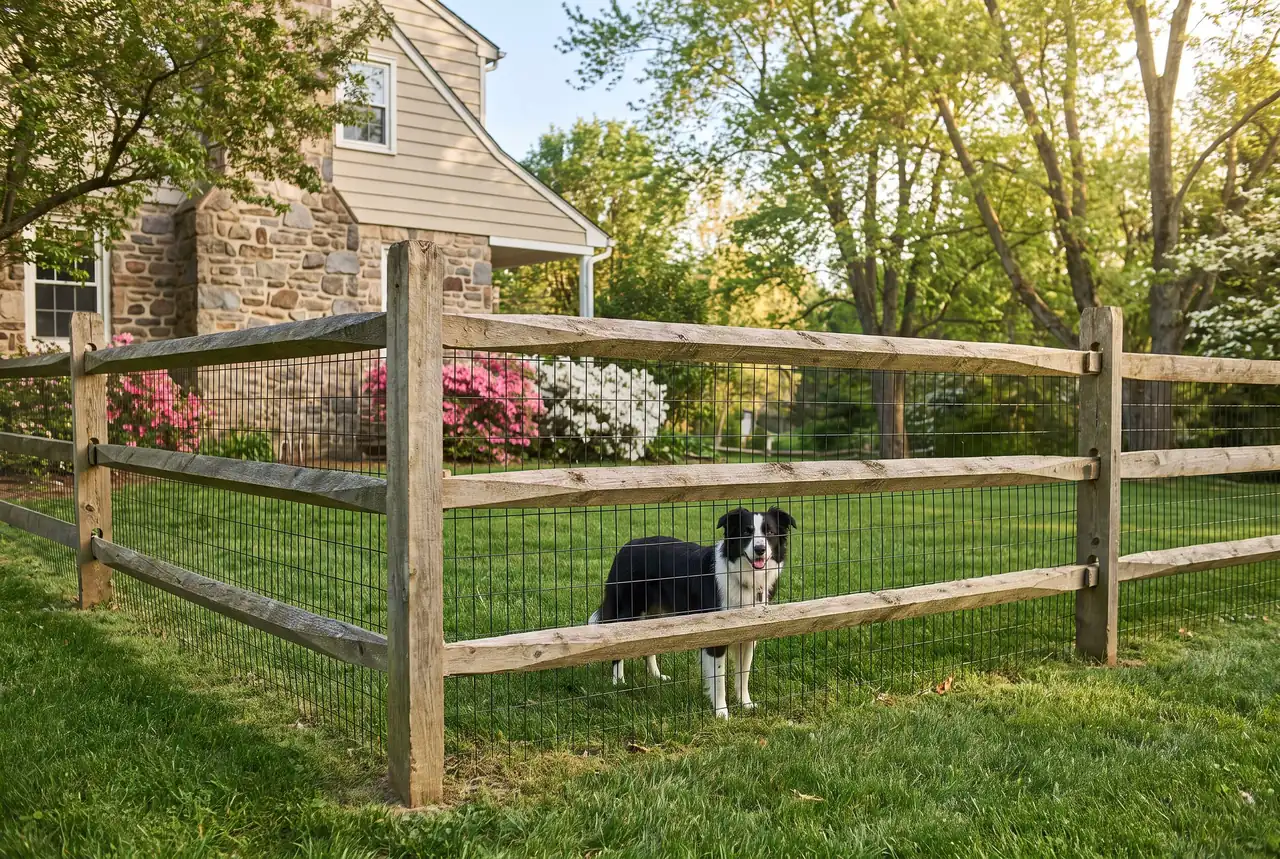
Split rail with welded wire mesh is common on larger properties around West Chester: it keeps a rural look while containing most dogs. For big yards, fencing a smaller dedicated dog area near the house is often more practical than fencing every acre. See our dog fence page for styles.
Does a dog fence need a permit?
Often, and the trigger varies by municipality. West Goshen requires a zoning permit for every fence regardless of height. Westtown requires one for fences over 40 feet of total length. East Bradford requires a township permit only for fences over 6 feet. A dog fence is treated like any other fence, so the same rules apply. Rules change, so confirm with the township — when you hire us, we pull the permit.
Walk the fence line with us.
A free on-site estimate in West Chester, PA and the surrounding townships. We check the rules for your street, handle the permit and HOA paperwork, and call PA One Call before we dig.
Sources & references
- West Goshen Township Ord. 12-2024
- Uwchlan Township fence permit guide
- PA One Call System — User Guide
- Westtown Township Code § 170-1505
- East Bradford Township — Fences
Codes and ordinances change. This page is general information, not legal advice; confirm requirements with your municipality.