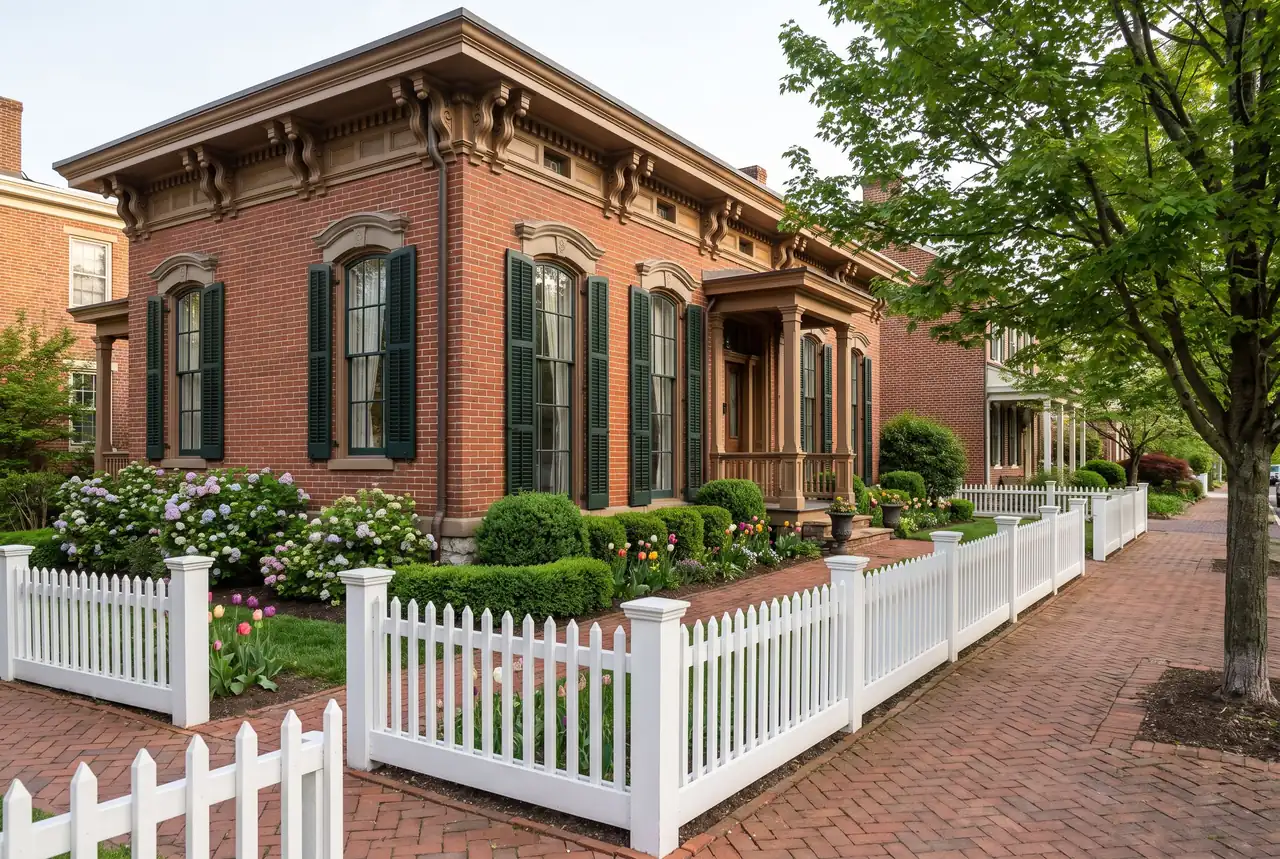
Short answer: In the West Chester Downtown Historic District in West Chester, PA, every fence goes through the borough’s $50 zoning review, and a fence visible from the street may also need review by the Historical and Architectural Review Board (HARB). Styles that echo the house, such as painted wood picket or iron-look aluminum, are the usual fit. We check HARB requirements before ordering.
West Chester, PA’s downtown historic district was listed on the National Register of Historic Places in 1985 and expanded in 2005 to roughly 521 acres, with about 3,137 contributing buildings dating from 1789 into the 1930s. The fence in front of one of those buildings is part of the streetscape, so the right choice starts with the house, not the catalog. 76 FENCE West Chester begins every historic-district job by looking at what the facade is telling us.
- District: West Chester Downtown Historic District, NRHP 1985, boundary increase 2005, about 521 acres.
- Zoning review: $50 for fences on the borough fee schedule at the time of writing.
- HARB: Issues Certificates of Appropriateness for work in the district; whether your fence needs one should be confirmed with the borough.
- Common styles (2003 borough inventory): Italianate is the most frequent, followed by Colonial Revival, Queen Anne, Federal and Greek Revival.
Does a fence in the historic district need HARB approval?
It may. The borough’s HARB issues Certificates of Appropriateness for work in the district, and a fence that can be seen from the street is the kind of project it may want to review. We confirm with the borough on each property before materials are ordered.
HARB minutes show the board reviewing facades, windows, roofs, siding, signs and awnings. It can approve, approve with conditions, table an application or ask for revisions, and it meets roughly monthly. That schedule is the main reason a historic-district fence takes longer than one a mile away in a township. A fence hidden in a rear yard is less likely to raise questions, but we do not assume; we ask. Our HARB fence guide covers the process in more depth.
What fence suits your house’s architectural style?
Match the fence to the era and the material of the front wall. The borough’s 2003 preservation inventory recorded brick on roughly two-thirds of properties, with stucco and wood behind it, and local green serpentine stone on some of the most distinctive.
Italianate
The borough’s most common style, with 441 examples in the 2003 inventory. Tall windows and bracketed cornices pair well with a simple iron-look aluminum fence or a painted picket with a plain cap.
Federal and Greek Revival
Flat brick fronts and restrained trim. A low painted wood picket in white or a dark heritage color keeps the line quiet. See picket fences.
Queen Anne and Colonial Revival
Porches, turned posts and more ornament. Shaped picket tops or a scalloped run can echo the porch without competing with it.
Serpentine stone
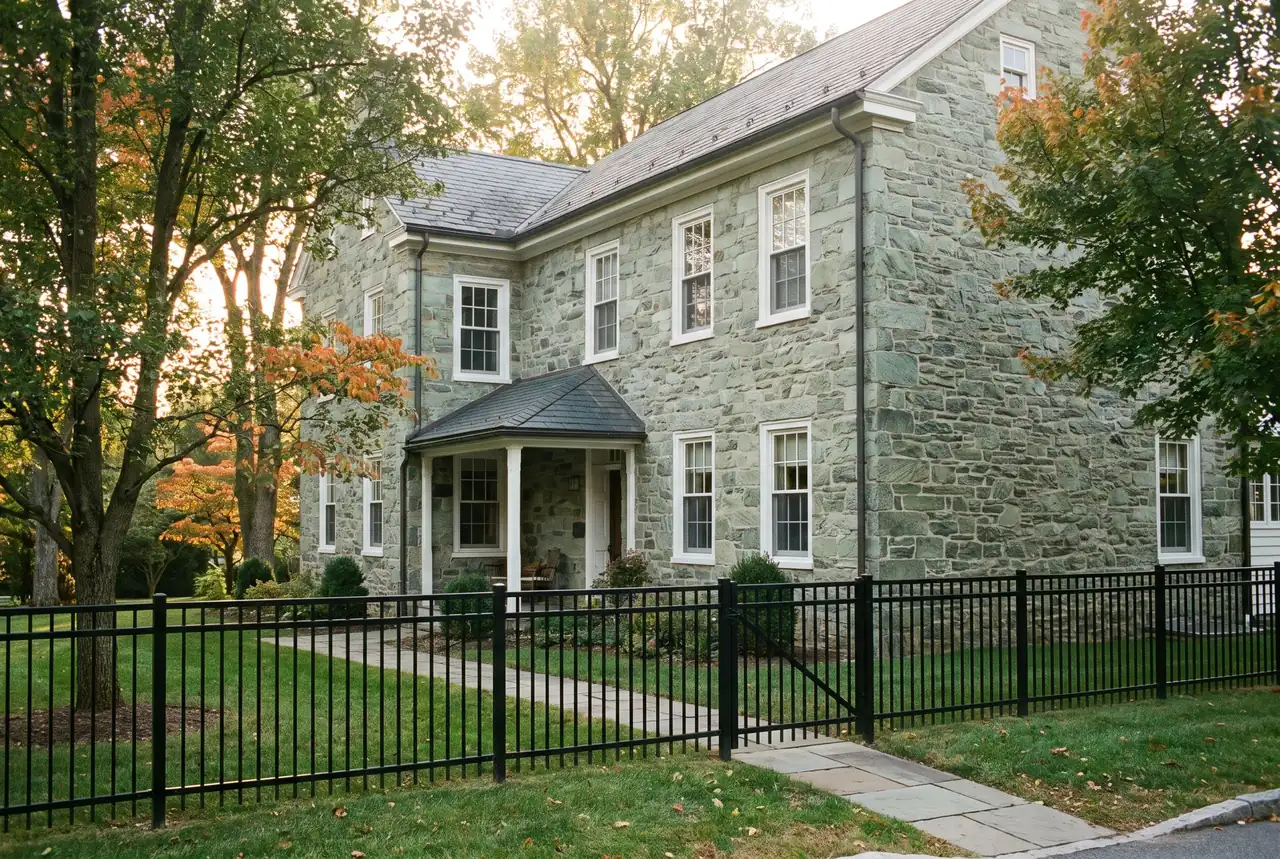
The green stone reads best behind black metal. Our aluminum fences give the look of iron without rust staining the stone.
Aluminum or wrought iron?
True wrought iron is rarely made today; most “iron” fencing is steel or aluminum. Aluminum does not rust, which matters next to brick and stone that stain easily, and its pickets can be specified in the same spacing and finials as older ironwork. Ornamental steel is heavier and more rigid, which some owners prefer for a long run along a busy street. Compare them in aluminum vs. wrought iron.
Will vinyl or chain link be allowed facing a historic street?
They are the materials most often discouraged by Pennsylvania review boards when they face a historic street, though we have not confirmed a written prohibition in the borough. In a rear yard behind the house, they are a more realistic option.
If low maintenance is the goal on the street side, aluminum is usually the better compromise: no painting, a historically familiar profile, and a finish that lasts. In the back yard, a wood or vinyl privacy fence serves the same purpose as it would anywhere else in the borough.
How does a historic-district fence project run?
The order matters, because materials should not be bought until any HARB question is answered.
- Walkthrough and photos. We photograph the facade, the sidewalk edge and the view from the street, and measure the run.
- Style and drawing. We propose a style and height with a simple elevation drawing and the product specifications.
- Borough check. We confirm whether the fence needs HARB review in addition to the zoning review, and file what is required.
- Order and schedule. Once approvals are in hand, materials are ordered and PA One Call (811) is notified before digging.
- Install. Most residential fences take a day or two on site once materials arrive.
For the borough rules outside the district, see our West Chester Borough page; if your property is near campus, the university-area page covers rental fencing. Neighboring East Bradford has its own set of historic properties and very different rules. The fence permit guide compares every municipality nearby.
Walk the fence line with us.
A free on-site estimate in West Chester, PA and the surrounding townships. We check the rules for your street, handle the permit and HOA paperwork, and call PA One Call before we dig.
Rules change, so confirm with the borough before you build. When you hire us, we pull the permit and check the HARB question first.
Sources & references
- West Chester Downtown Historic District (Wikipedia)
- Borough Comprehensive Historic Preservation Plan
- West Chester Borough: Building Permits (HARB application)
- West Chester Borough Fee Schedule
Codes and ordinances change. This page is general information, not legal advice; confirm requirements with your municipality.