Short answer: For a rowhome or twin backyard in West Chester, PA, a 6-foot wood or vinyl privacy fence with a locking alley gate is the most common choice, sometimes with a lower open section near the house. The borough charges a $50 zoning review for fences, and corner lots must keep a clear sight triangle. Historic-district homes may also need HARB review.
West Chester, PA is a borough of attached homes. The borough’s 2003 historic preservation inventory counted 1,439 twins and 1,040 rowhouses against 649 single homes, most of them on long, narrow lots reached from the back by a grid of alleys. That shape makes backyard fencing a specific puzzle: limited width, neighbors on both sides, an alley to the rear, and often a historic streetscape out front.
- Permit: West Chester Borough zoning review, $50 for fences per the borough fee schedule (at the time of writing — confirm with the borough).
- Corners: clear sight triangle at intersections (§ 112-805).
- Historic district: a fence visible from the street may need HARB review.
- Residential height limit: confirm with the borough zoning officer.
- Before digging: PA One Call, 3 to 10 business days ahead.
Do you need a permit for a backyard fence in West Chester Borough?
Yes, plan on it. The borough’s fee schedule lists a $50 zoning review that covers site plans, fences, sheds and patios, and the Building Permits page links a combined shed, fence and patio application. The borough also asks that contractors be registered with the Pennsylvania Attorney General and list their home improvement contractor number on the permit.
The borough’s zoning chapter sets fence heights for its commercial and industrial districts, but we did not find a residential height figure in the section we reviewed, so confirm the limit for your block with the zoning officer. Our West Chester Borough page collects the borough rules in one place.
What fence works best in a narrow backyard?
One that gives privacy without making a small space feel boxed in. A few approaches work especially well on 15- to 25-foot-wide lots:
Full privacy
Six-foot wood or vinyl on both sides and the alley line. Maximum seclusion; best for patios and dogs. See privacy fences.
Stepped privacy
Taller near the patio, lower toward the alley. Keeps light in and the yard from feeling like a corridor.
Shadowbox or semi-privacy
Alternating boards let air move through a tight yard and look finished from both sides, which helps with neighbors.
How should an alley gate be set up?
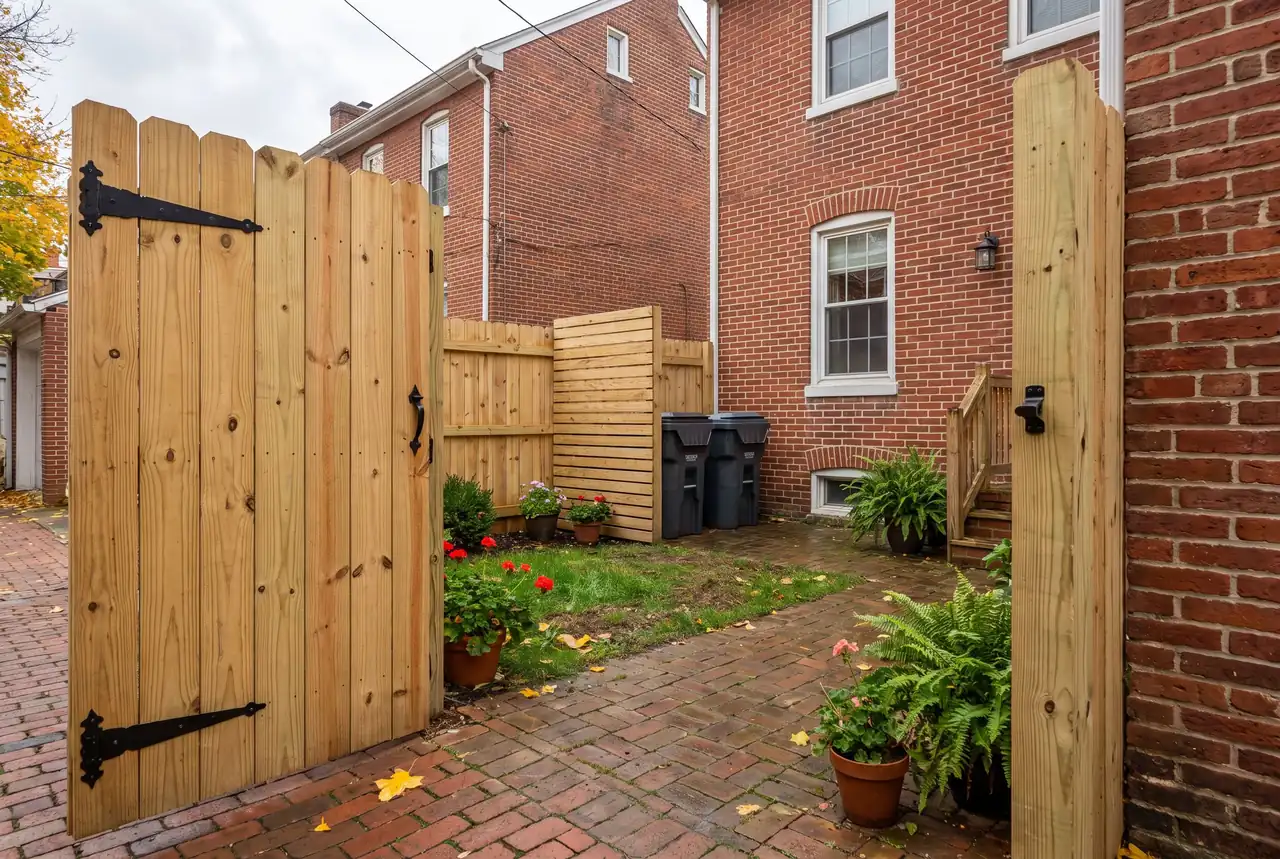
Securely and so it swings into your yard, not into the alley. Alley gates see daily use for trash cans, bikes and deliveries, so they take a beating. A sturdy frame, hinges sized for the gate weight, and a keyed or coded lock make the difference. Gate width should fit your trash and recycling bins with room to spare.
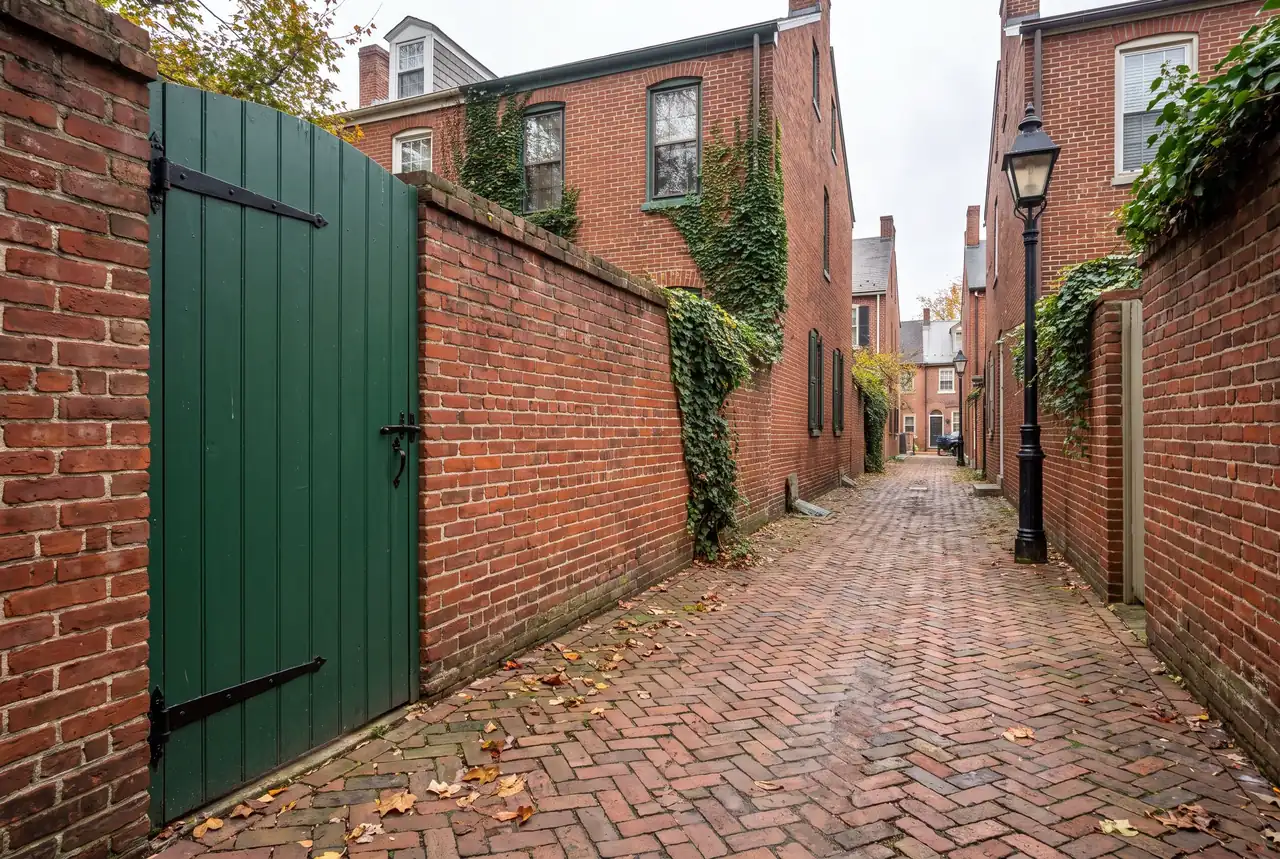
If the alley is narrow, check that a swinging gate does not block a neighbor’s access or a parking space. Our gate installation page covers hardware options.
Who owns the fence between two twins?
Whoever built it on their own property, in most cases. If the fence sits exactly on the line, ownership and upkeep are best settled in writing with your neighbor before work starts. Many twin owners split a new dividing fence by agreement. Our shared fence guide goes deeper, and which side faces the neighbor covers the finished-side question.
What about the front of a borough home?
Front yards in the borough are often tiny or nonexistent, and many sit within the historic district. A low aluminum or painted wood picket fence is the usual choice. A fence visible from the street there may need HARB review in addition to the $50 zoning review; we check before ordering materials. See our HARB fence guide.
Brick sidewalks are another borough detail. Sidewalk work has its own borough specification, so a fence line should be planned to avoid disturbing the public sidewalk.
Can you fence around trash cans and AC units?
Yes. Small screens and enclosures are common in rowhome yards, where the bins and the condenser end up in the most visible spot. A three-sided enclosure with a gate, matched to the main fence, hides them without taking much space. Leave enough clearance around an air conditioner for airflow and service.
Which materials hold up best in borough yards?
Each has a place. Pressure-treated pine is the familiar choice and the easiest to repair board by board. Cedar weathers to a soft gray that suits older brick. Vinyl skips staining entirely, which appeals to owners who would rather not maintain a fence in a cramped space where reaching the far side is awkward. Aluminum works for open sections and front yards. In a shaded, north-facing rowhome yard, moisture lingers, so a wood fence there benefits from regular washing and re-treating every two to three years, while vinyl may need a yearly wash to keep mildew off. See wood fencing for more.
How long does a rowhome fence take to install?
Most residential installs take about a day or two on site once materials arrive, and small borough backyards often fall on the shorter end. Access is the variable: materials may need to come through the house or down the alley, so we plan the delivery route at the walkthrough.
For a broader look at borough properties, see our historic district page. Rules change, so confirm with the borough — when you hire us, we pull the permit.
Walk the fence line with us.
A free on-site estimate in West Chester, PA and the surrounding townships. We check the rules for your street, handle the permit and HOA paperwork, and call PA One Call before we dig.
Sources & references
- West Chester Borough — Building Permits
- West Chester Borough — Fee Schedule
- West Chester Borough Code §§ 112-804, 112-805
- West Chester Historic Preservation Plan
Codes and ordinances change. This page is general information, not legal advice; confirm requirements with your municipality.