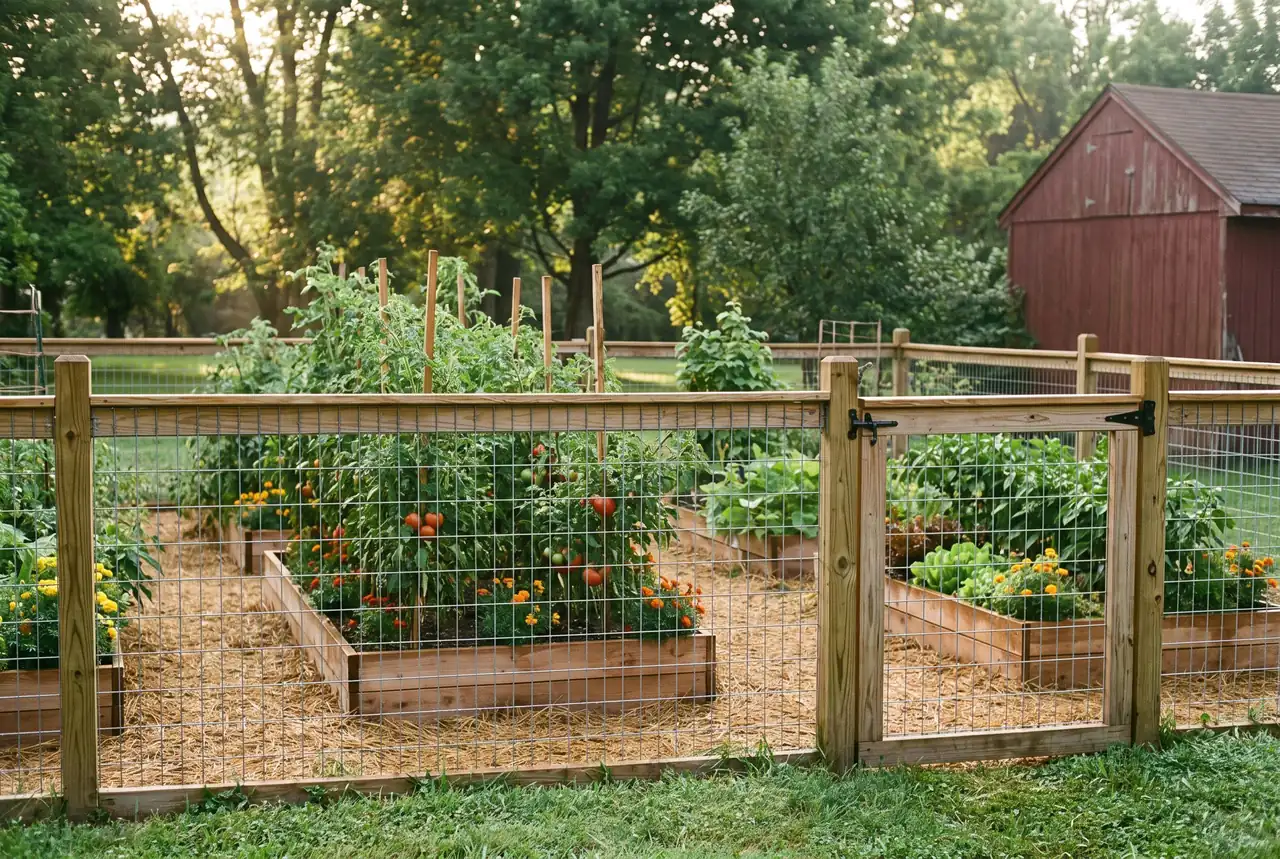
Short answer: Deer exclusion fencing generally needs to be about 8 feet tall to work, while most townships around West Chester, PA cap residential side and rear fences near 6 feet. That gap usually means a permit, a variance or a smaller enclosure around the garden or orchard. Black mesh on tall posts keeps the fence nearly invisible.
If you garden anywhere around West Chester, PA, you already know the deer problem. Pennsylvania has averaged around 30 deer per forested square mile, three to six times the density wildlife planners consider healthy, and suburban areas can run much higher, according to the WeConservePA deer management handbook. Hostas, young fruit trees and vegetable beds do not stand a chance. A deer fence is the reliable answer, but the height it needs runs straight into township codes written for ordinary backyard fences.
How tall does a deer fence need to be?
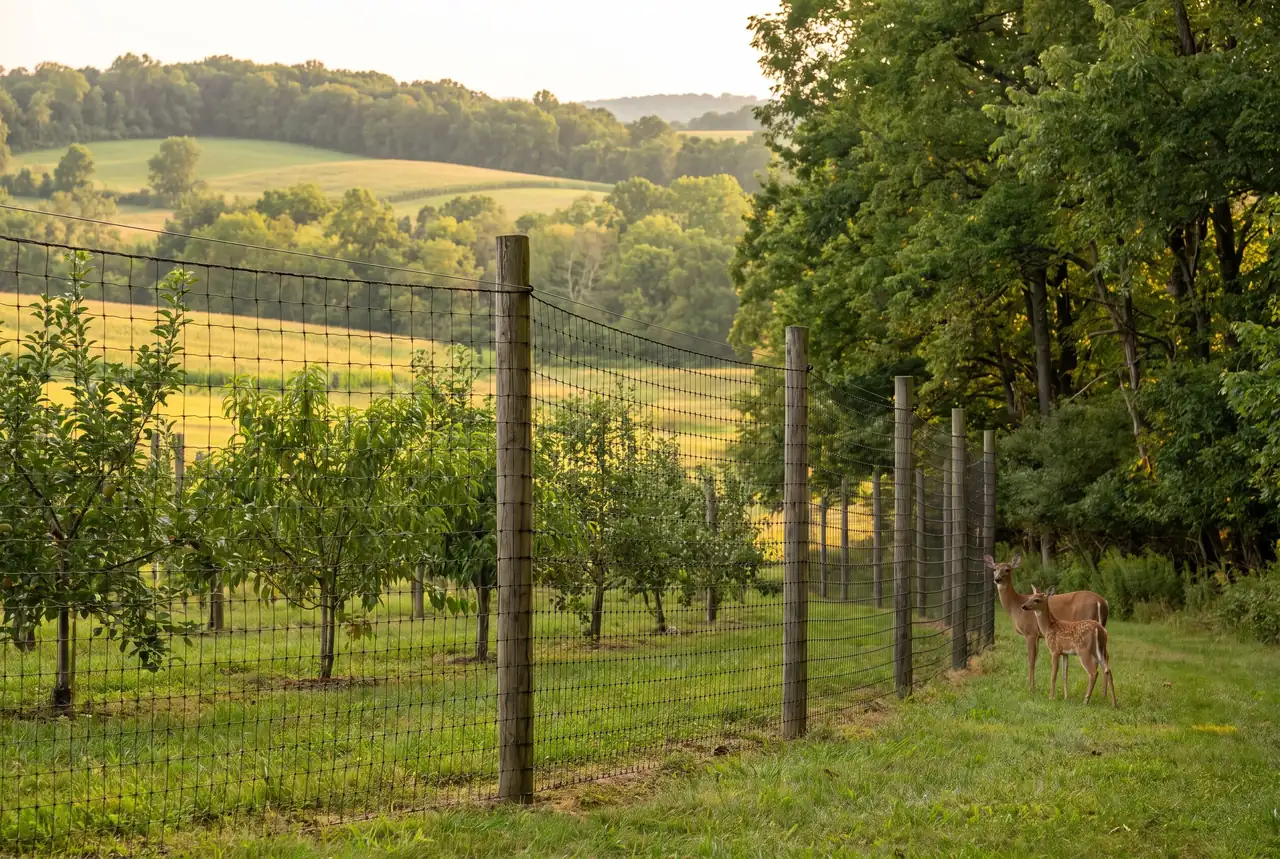
About 8 feet. The WeConservePA handbook recommends deer exclusion fencing 8 to 12 feet high. A 6-foot fence slows deer down but a motivated deer will clear it.
Height is not the only factor. Deer are less likely to jump into a space they cannot judge, so a narrow enclosure, a double fence or an angled fence can work at lower heights. Those designs take more ground, which is why they are more common on larger lots. Our deer fence height guide compares the options.
Can you build an 8-foot fence in your township?
Often only with a permit or variance. Here is what the codes we reviewed say for residential side and rear yards.
| Municipality | What the code says about tall fences |
|---|---|
| West Goshen | 6 ft max residential side and rear; building permit as well as zoning permit at 8 ft or more |
| East Bradford | No height cap stated; over 6 ft needs a building permit and engineered plans |
| Thornbury | 6 ft max in any residential yard |
| Westtown | 6 ft in setbacks, decorative post tops to 7 ft |
| West Whiteland (Exton) | 6 ft in required yards; above 6 ft, that portion at least 50% non-opaque; 12 ft absolute max |
West Whiteland’s rule is interesting for deer fencing: a mostly see-through mesh above 6 feet fits the wording. Elsewhere, the path may be a variance or keeping the fence out of required yard setbacks. We check your township before quoting a height. See the permit guide and East Bradford page.
Which deer fence materials work best?
Black welded or woven wire mesh on wood or metal posts is the most common choice. Black disappears against woods and hedges in a way galvanized metal does not, which matters on properties where the view is the point.
- Black welded wire or steel mesh: strongest, resists deer pushing through.
- Polypropylene mesh: lighter and less visible; best for gardens with low deer pressure.
- Black vinyl-coated chain link: durable and pet-proof, at a higher cost per foot.
See wire mesh fencing and black chain link.
Should you fence the whole yard or just the garden?
For most homes, just the garden. A tight enclosure around vegetable beds, an orchard or a specimen planting costs far less, often stays out of required yard setbacks, and is easier to approve than a perimeter fence. Our garden fence page covers smaller enclosures.
Fencing a whole lot makes more sense on acreage, nurseries and orchards, where the protected area is large and the fence can run well inside the property lines.
What about creeks, slopes and rock?
Many deer-pressure properties around West Chester sit along the Brandywine and its tributaries. East Bradford and Chadds Ford prohibit new construction within 50 feet of the top of a stream bank, and floodways restrict fences that can trap debris. A deer fence along a creek needs to respect those lines. Read fences near streams before planning one.
How does a deer fence handle rocky ground and long runs?
Tall fences put more leverage on each post, so post setting matters more than on a 4-foot fence. Much of the upland around West Chester is schist and gneiss, and post holes often hit rock; we use core drilling or rock bars and adjust the setting with the local inspector’s input. In the Chester Valley limestone around Exton, we avoid concentrating roof or downspout runoff at posts. Long runs also need bracing at corners and gates so the mesh stays tight for years. See rocky soil and fence posts.
76 FENCE West Chester handles the permit, any variance paperwork the township requires, HOA approval and the PA One Call request. Height limits on deer fence vary more than most, so confirm with the township before you settle on 8 feet; when you hire us, we pull the permit. Text or call 484-999-0965 and we will walk the orchard or garden with you.
Walk the fence line with us.
A free on-site estimate in West Chester, PA and the surrounding townships. We check the rules for your street, handle the permit and HOA paperwork, and call PA One Call before we dig.
Sources & references
- WeConservePA library: deer management
- West Whiteland Township Code § 325-29
- East Bradford Township: Fences
- West Goshen Township Ordinance 12-2024
Codes and ordinances change. This page is general information, not legal advice; confirm requirements with your municipality.