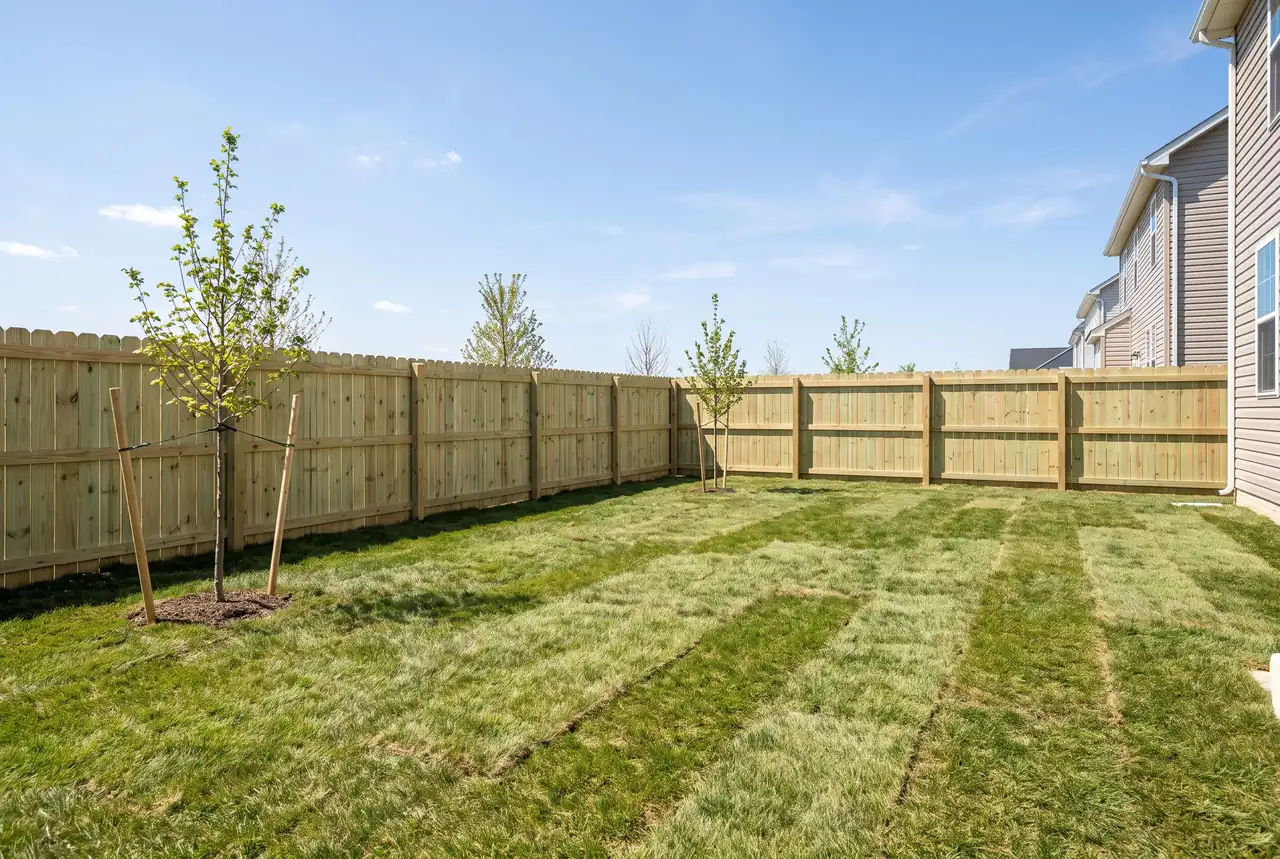
Short answer: Wood is the most adaptable fence material in West Chester, PA. It can be painted to suit an Italianate porch, built as a 6-ft privacy fence behind a twin, or run as board fencing across a pasture. Pressure-treated pine keeps the cost down; cedar costs more but resists decay naturally. With care, 15 to 20 years is typical.
Wood was the fence material of West Chester long before anything else was available, and it still fits the borough’s brick twins, the township colonials and the stone farmhouses out toward the Brandywine better than most alternatives. 76 FENCE West Chester builds wood fences in pressure-treated pine and cedar. Below is what to weigh before you choose wood, and how our climate and ground affect it.
Pressure-treated pine or cedar: which should you choose?
Choose pressure-treated pine for value and paintability, and cedar for appearance and natural rot resistance. Both are real wood and both need periodic care.
| Pressure-treated pine | Cedar | |
|---|---|---|
| Look when new | Pale green or tan from treatment | Warm reddish to amber tones |
| How it weathers | Grays; can check and twist if left untreated | Silvers evenly; tends to stay straighter |
| Decay resistance | From the chemical treatment | Natural oils in the wood |
| Paint or stain | Takes either once dry | Usually stained or sealed to show the grain |
| Relative cost | Lower | Higher |
If the look matters most, read our cedar fence page. If the budget matters most, pine dog-ear or shadowbox is the usual answer.
What do humidity and freeze-thaw do to a wood fence here?
They work on the posts first. A wood fence rarely fails in the middle of a board; it fails where the post meets wet soil, and where a post has been lifted by frost.
Chester County summers are humid and our soils hold water. Boards swell in August and shrink in January, which is why gaps open between privacy boards over the first year or two and why board-on-board or shadowbox designs hide that movement better than butted boards. At grade, keep soil, mulch and firewood off the bottom of the fence so it can dry out between rains, and keep downspouts and sump discharges from emptying at the base of a post.
In winter, frost heave pushes up any post that is set too shallow. Pennsylvania lets municipalities set frost depth, generally between 30 and 42 inches according to footingdepth.com, so we follow the local inspector’s figure. More detail is on our fence post depth page.
Rock in the post holes
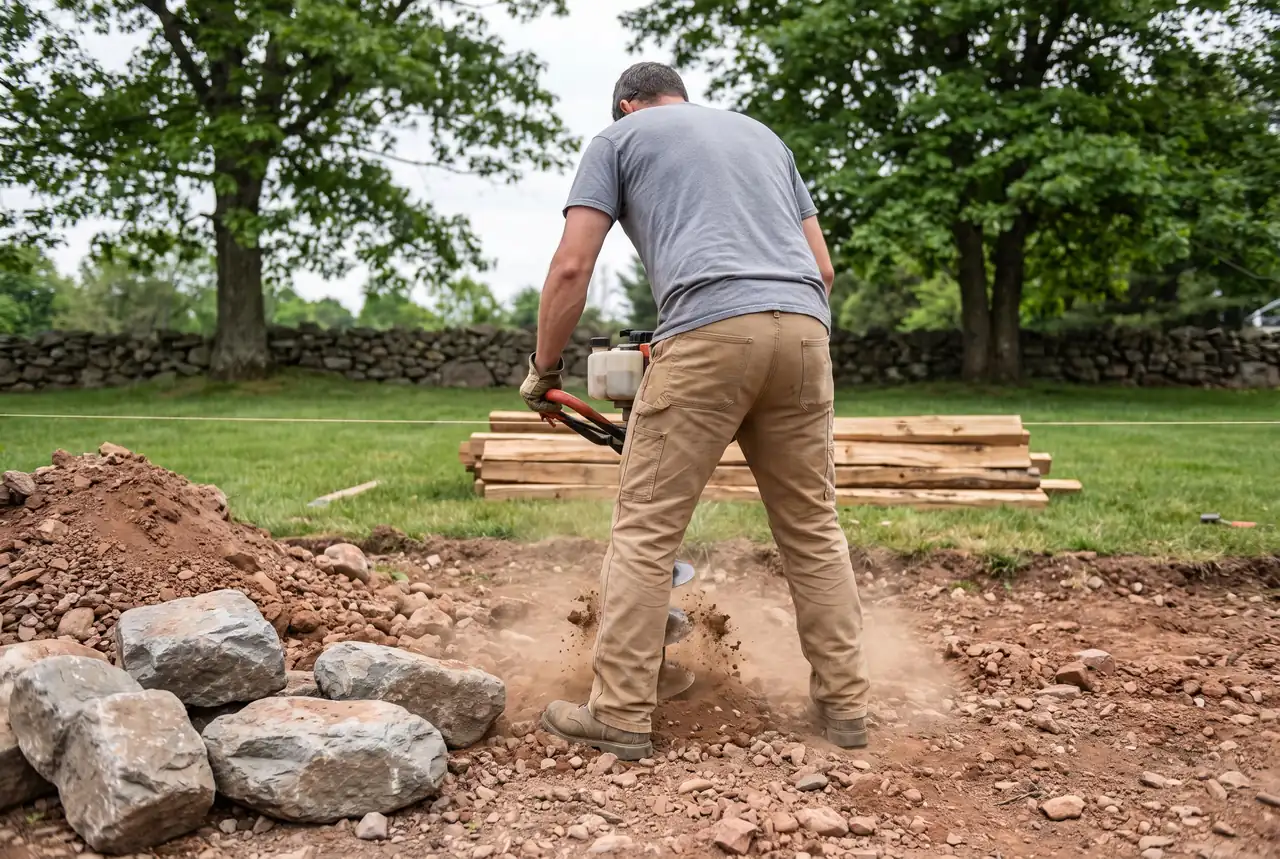
Much of the ground around West Chester sits on schist and gneiss, and it is common to hit rock a foot or two down. That changes how a wood post is set, not whether a fence can be built. Crews may core drill, break the rock or set a shallower post with more concrete where the inspector allows it.
Our rocky soil guide covers the options.
Is wood the right choice in the historic district?
Often it is the easiest choice there. Painted wood picket is among the most historically compatible fence types for the borough’s Federal, Greek Revival and Italianate houses.
Wood is often the expected material in the downtown historic district, but a fence the street can see may still need HARB review along with zoning, and we check that before buying lumber. A simple picket painted to match the house trim is usually the starting point; see the picket fence page and the HARB fence guide.
Where does wood earn its keep?
- Narrow rear yards behind twins and rowhomes, with a wood gate onto the alley. See rowhome backyard fences.
- Board fencing for horses and pasture, painted white or black.
- Split rail along a farmhouse lane or a property edge where you want a boundary, not a wall.
- Shadowbox semi-privacy where township code says the finished side must face the neighbor.
- Arbors and double drive gates that need a custom size.
How do you keep a wood fence looking right?
A short routine, done on schedule, is what separates a 10-year wood fence from a 20-year one.
- Wash once a year. A gentle wash in spring removes mildew and pollen before it stains the grain.
- Re-treat every 2 to 3 years. Stain, sealer or paint protects against the wet-dry cycling of our summers.
- Walk the line after storms. Look for leaning posts, split rails and limbs resting on the top rail.
- Check gates each fall. Sag shows up first at the latch; a small adjustment now saves a rebuilt gate later.
If you would rather not do it yourself, our fence maintenance service handles washing and staining.
What does wood fencing cost?
HomeGuide’s 2026 installation guide puts wood fencing at roughly $20 to $50 per installed foot nationally, with taller privacy and premium boards at the upper end. Local quotes depend on the yard, the gates and the ground, and the free estimate gives you a real number. The wood fence cost page has more detail.
Walk the fence line with us.
A free on-site estimate in West Chester, PA and the surrounding townships. We check the rules for your street, handle the permit and HOA paperwork, and call PA One Call before we dig.
Sources & references
- Footing Depth: Pennsylvania frost line
- HomeGuide: Wood fence cost
- Westtown Township Code § 170-1505 (fences)
- West Goshen Township Ordinance 12-2024 (fences)
Codes and ordinances change. This page is general information, not legal advice; confirm requirements with your municipality.