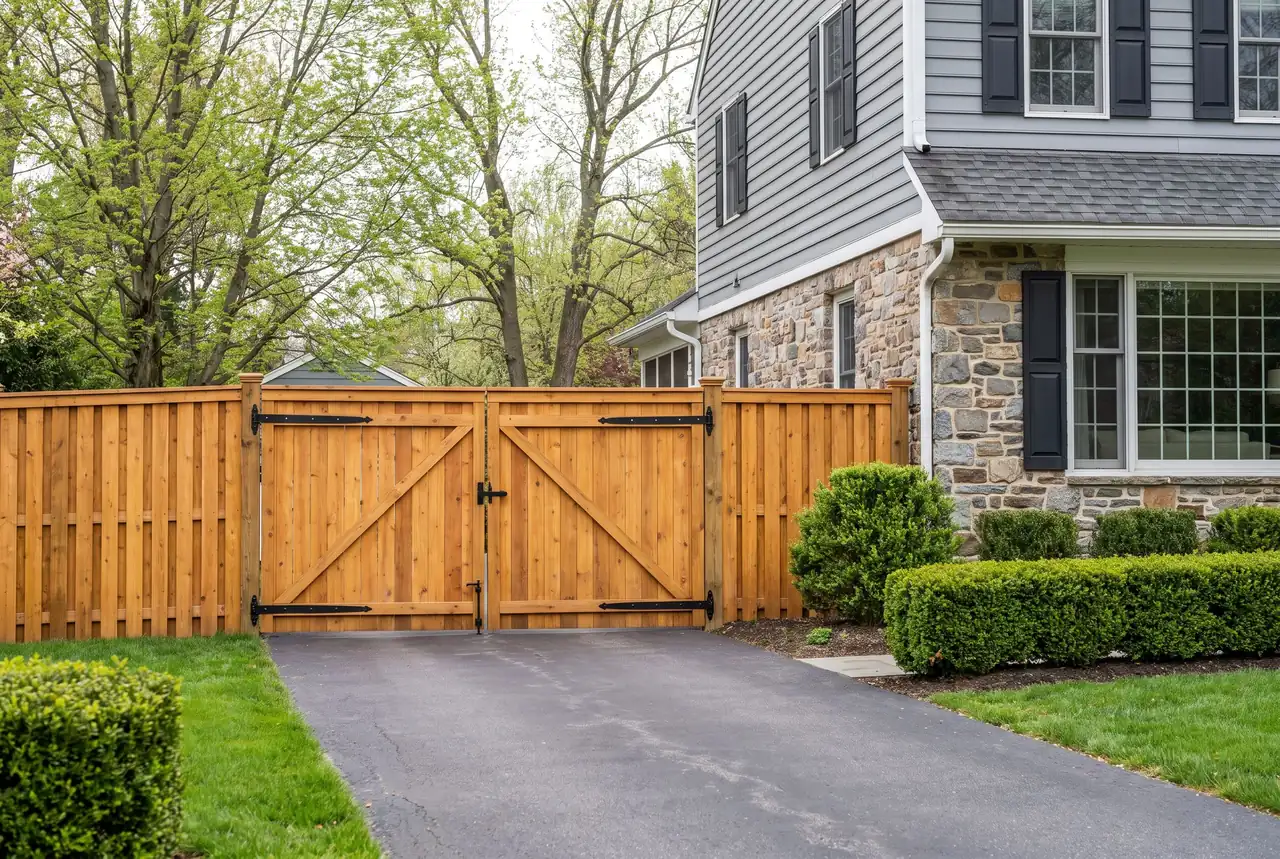
Short answer: 76 FENCE West Chester builds and installs gates in West Chester, PA: single walk gates, double drive gates, alley gates for borough rowhomes and twins, pool gates with self-closing hardware, and wide farm gates. We add gates to new fences or to existing ones, and size each opening to what actually has to pass through it.
A gate is the only part of a fence that moves, so it takes the most wear and gets the most attention from you. In West Chester, PA the jobs vary widely: a 36-inch wood gate onto a brick alley in the borough, a double drive gate for a boat on a township lot, a pool gate that has to swing shut every time, or a 12-foot farm gate a tractor can clear. 76 FENCE builds each one around its hinge post, because that post carries the load long after the latch has been forgotten.
Walk gates
The everyday gate between a side yard and the back. Width is set by what you wheel through, whether a mower, a wheelbarrow or trash bins on collection day.
Double drive gates
Two leaves meeting in the middle for vehicles, trailers or equipment. A drop rod holds the inactive leaf, and a level opening keeps both swinging clear.
Alley gates
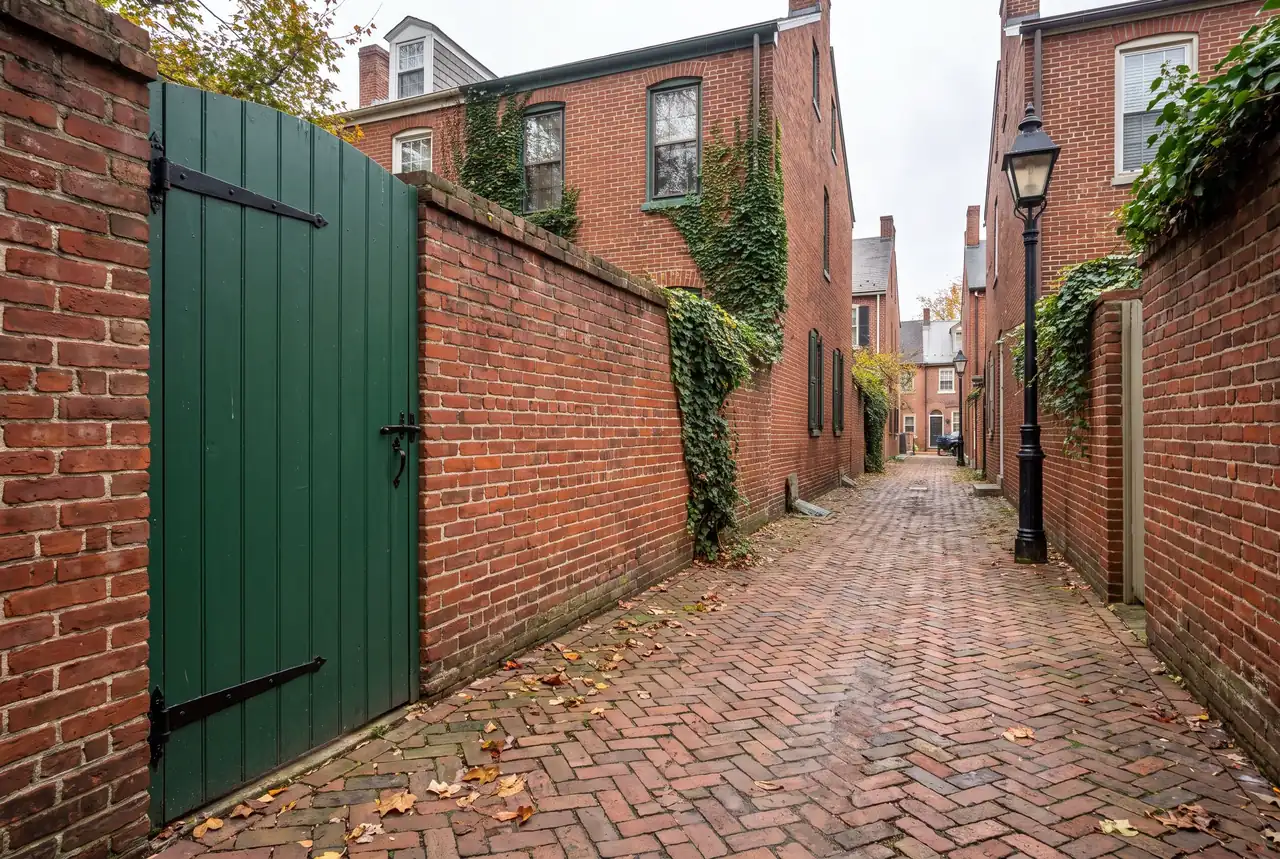
The rear gate on a borough rowhome or twin, opening to the alley. These need a lock that works from both sides and a frame that resists sag on a narrow post spacing.
Pool gates
Self-closing, self-latching and swinging out away from the pool, with the latch placed where small children cannot reach it from outside.
What kind of gate works on a West Chester alley?
A solid, lockable gate with a sturdy hinge post and hardware that will not rust in a season. Most borough alley gates are wood or vinyl to match a privacy fence.
The borough’s twins and rowhouses sit on narrow lots with an alley grid behind them, so the rear gate is often the main way in for bins, bikes and deliveries. Two practical points come up at almost every walkthrough. First, swing direction: an alley gate that opens outward can block the alley or catch a passing car, so most swing into the yard. Second, the threshold: brick and concrete at the alley edge are rarely level, and we set the gate bottom to clear the high spot. Our rowhome backyard fence guide covers the fence around it, and the borough page covers local review.
How wide should a gate be?
Wide enough for the largest thing you will move through it, plus some margin. Measure that object, not the space you happen to have.
| What passes through | Typical gate choice | Things to plan for |
|---|---|---|
| People, pets, bins | Single walk gate | Latch height, swing clear of steps and downspouts |
| Riding mower or garden cart | Wide single or double walk gate | Measure the mower deck, not just the body |
| Cars, trailers, a boat | Double drive gate | Turning radius from the street, a level opening |
| Tractors, horse trailers, hay deliveries | Farm gate or double drive gate | Swing room, latch reachable from a vehicle |
Gates on horse and acreage properties often get wider than people expect once the trailer and the turn are measured together. See our horse fence page for how gates fit into a pasture layout.
What makes a gate sag, and how do you prevent it?
Almost always a hinge post that moves or a frame that racks. Prevention starts with a heavier post set deeper and a frame built square with bracing.
Gate leaves act as levers on their hinge posts; the wider and heavier the leaf, the more force pulls the post toward the opening. We use a heavier post at hinge locations than along the line, set it in concrete, and brace wood frames diagonally from the bottom hinge corner up. On vinyl and aluminum gates, we use frames and hardware made for the gate’s width. If an existing gate already drags, our repair service resets the post and squares the frame.
What rules apply to pool gates?
Pennsylvania’s adopted pool code, based on the 2018 ISPSC, requires pedestrian gates in a pool barrier to open outward away from the pool and to be self-closing and self-latching.
If the latch release sits lower than 54 inches above grade, it must be on the pool side of the gate. Some townships add local requirements; Westtown requires a permit for any pool enclosure fence, for example. Our PA pool fence code guide explains the full barrier rules, and the pool fence page shows the styles we install.
Can you add a gate to my existing fence?
Usually, yes. We cut the opening, add proper hinge and latch posts, and build or fit a gate in matching material.
Matching is easiest with wood, which we can build to the existing style and stain to blend over time. With vinyl and aluminum, we look for the same manufacturer’s gate; if the style has been discontinued, we suggest the closest option. For wider driveways or estate entrances where you would rather not get out of the car, see automatic gates.
Walk the fence line with us.
A free on-site estimate in West Chester, PA and the surrounding townships. We check the rules for your street, handle the permit and HOA paperwork, and call PA One Call before we dig.