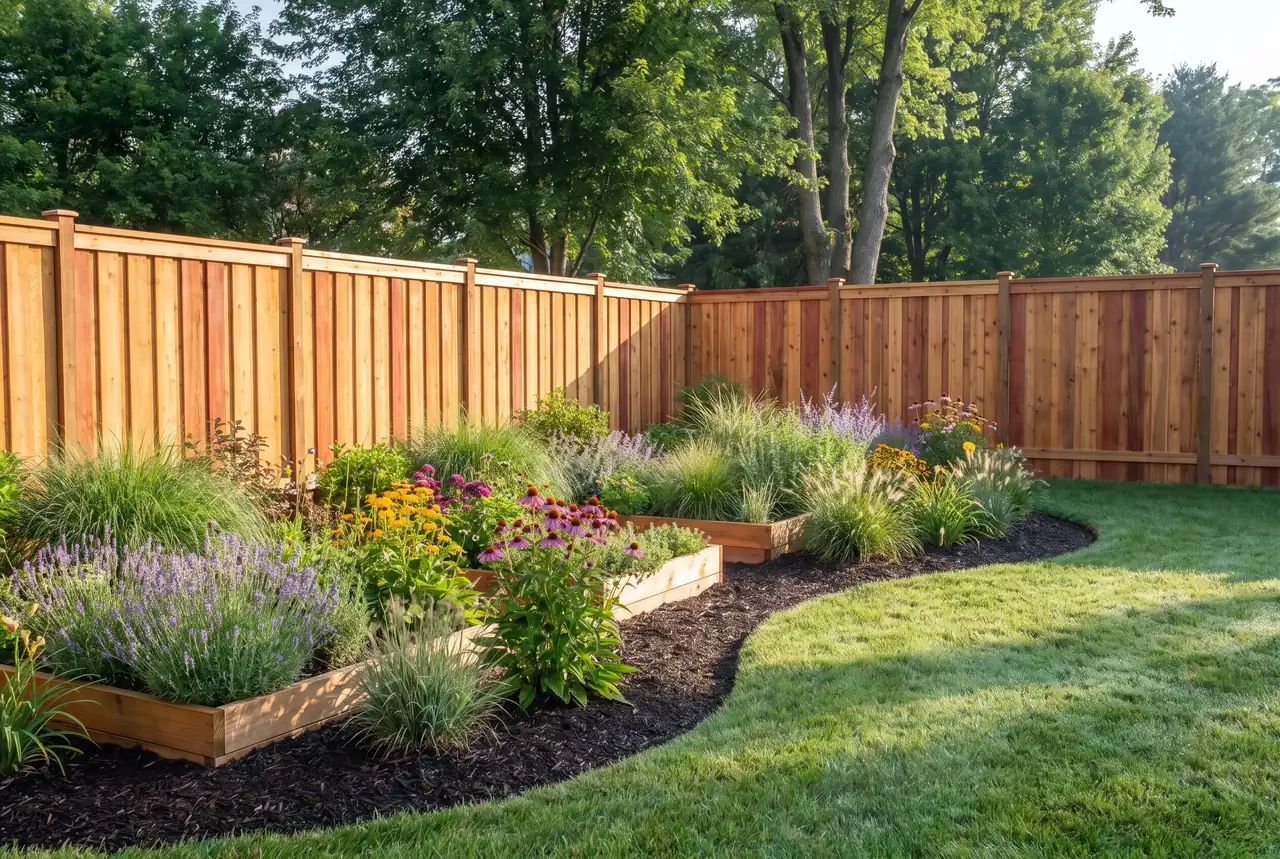
Short answer: Choose cedar in West Chester, PA when you want a wood fence with natural color, boards that tend to stay straighter, and decay resistance that comes from the wood itself. It costs more than pressure-treated pine and still needs a yearly wash and fresh sealer every two to three years in our humid summers. It suits board-on-board privacy, horizontal designs and arbor gates.
Cedar is the wood people choose when the fence is part of the view: the run beside a patio, a horizontal screen off a modern addition, or an arbor gate into a garden. 76 FENCE West Chester builds cedar fences throughout West Chester, PA and the nearby townships. This page explains where cedar’s extra cost pays off, and where pine or another material may be the better call.
Why do people pay more for cedar?
For appearance and stability. Cedar’s natural oils give it rot and insect resistance without pressure treatment, and the wood tends to twist and cup less than pine as it goes through wet and dry seasons.
It is also lighter, which makes long gates easier on their hinges, and it takes stain beautifully. Left alone, it weathers to an even silver-gray that many owners near the Brandywine prefer because it blends with stone walls and old barns.
On price, HomeGuide’s December 2025 wood fence guide puts standard cedar at roughly $35 to $40 per installed foot nationally, and premium 6-ft privacy in pressure-treated pine or western red cedar at roughly $45 to $90. Local quotes depend on height, design, gates and the ground in your yard; the free estimate gives you a real number. The wood fence cost page puts those ranges in context.
Does cedar hold up to Chester County humidity and freeze-thaw?
The boards hold up well. The parts that need attention are the posts and the bottom edge, because constant ground contact and standing water are hard on any wood.
Our winters bring repeated freezing and thawing, and frost can lift a shallow post. Pennsylvania lets municipalities set frost depth, generally between 30 and 42 inches according to footingdepth.com, so posts go in to the local inspector’s requirement. Ask at your estimate what post material is quoted and why, since in-ground contact is the hardest test the fence faces.
In summer, shaded runs along creeks and wooded lot lines can grow mildew. A gentle wash each spring keeps it from staining the grain. Keep mulch beds an inch or two below the bottom board so the wood can dry.
Which cedar styles suit West Chester homes?
Board-on-board
Overlapping boards give full privacy with no see-through gaps as the wood shrinks, and look finished on both sides.
Horizontal
Clean, modern lines that suit newer builds and renovated farmhouses. See horizontal fences.
Shadowbox
Alternating boards let air move, which helps gardens and humid corners. See semi-privacy.
Arbors and gates
A cedar arbor turns an ordinary opening into an entrance. See gate installation.
Should you stain, seal, or let cedar gray?
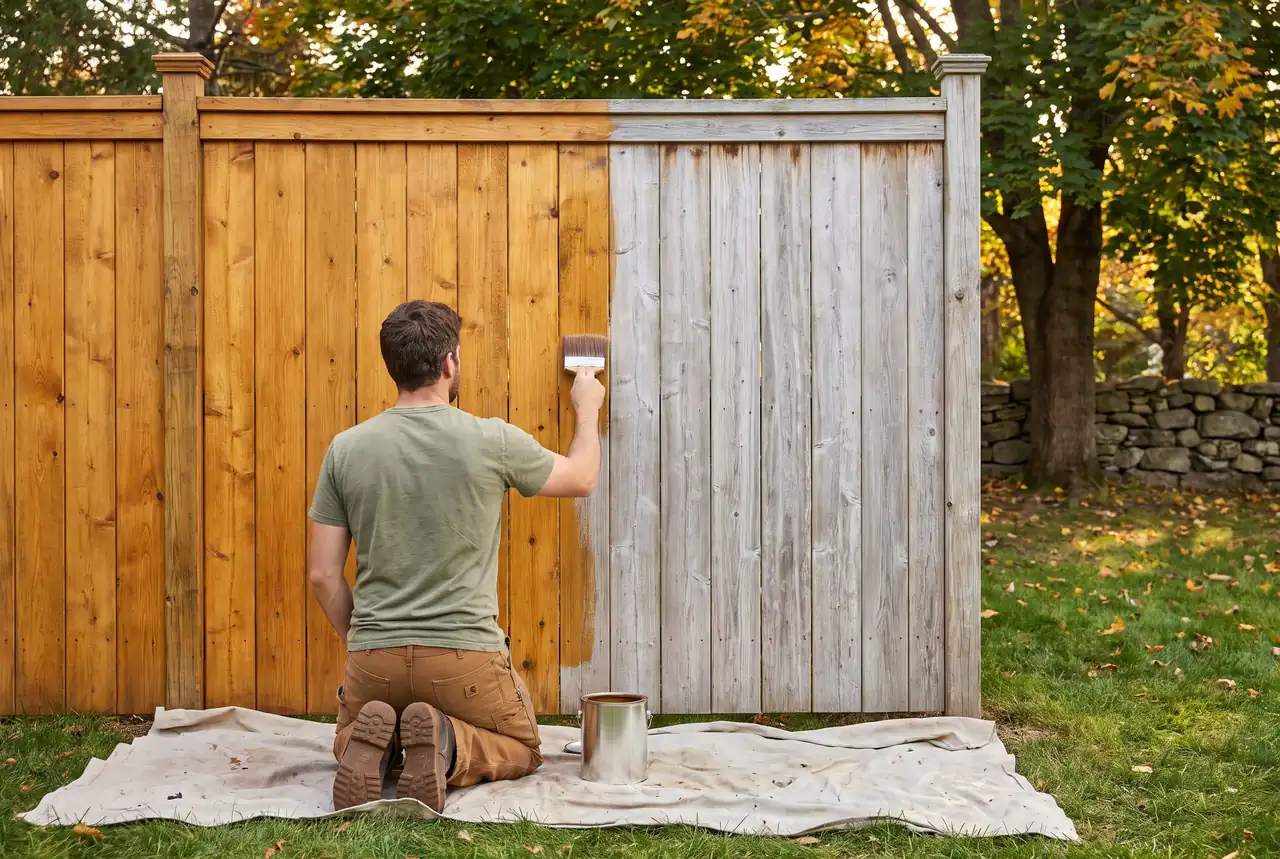
All three are reasonable; the choice is about the look you want and how much upkeep you will do. Typical guidance for wood is to re-treat every 2 to 3 years.
A clear or lightly tinted sealer keeps the warm color longer. A semi-transparent stain evens out color differences between boards. Leaving cedar unsealed lets it silver naturally, though it will show mildew more readily in shade. Whatever you choose, apply it in a dry stretch of late spring or early fall when the boards are dry and the forecast is clear. Our fence maintenance team can handle it for you.
Can cedar go in the historic district or an HOA community?
Usually, with the right style. Wood is a traditional material for the borough’s historic streets, but a natural-finish horizontal design may read as modern against a Federal or Italianate facade.
A cedar fence the street can see inside the downtown historic district may need HARB review on top of the $50 zoning step, which we confirm first; the historic district page has more. In association neighborhoods, the guidelines may specify style and finish, and some townships, such as Uwchlan, ask for the HOA approval letter with the permit. Our HOA approval help covers that paperwork.
Is cedar worth it for a small rowhome yard?
It can be. In a borough rear yard that is only a few paces deep, the fence is most of what you see from the kitchen window, so the appearance of cedar goes a long way. Because the run is short, the price difference from pine is smaller in dollars than it is on a large suburban lot. Pine painted to match the house is the alternative if you prefer color over grain.
Walk the fence line with us.
A free on-site estimate in West Chester, PA and the surrounding townships. We check the rules for your street, handle the permit and HOA paperwork, and call PA One Call before we dig.
Sources & references
Codes and ordinances change. This page is general information, not legal advice; confirm requirements with your municipality.