Short answer: Yes. Before digging fence post holes in West Chester, PA, the excavator must notify PA One Call (811) at least 3 and no more than 10 business days ahead. Only the party who makes the call is protected, so your fence contractor should make it, not you. Utilities mark public lines, but private lines such as invisible dog fence wire, irrigation and lines to sheds are not marked.
Every fence post is a hole in the ground, and a typical residential fence needs dozens of them. Gas service lines, buried electric and fiber run under front lawns and along back lot lines all over Chester County. Pennsylvania’s One Call system exists so those lines are marked before anyone digs. Here is how it works, who calls, what the paint colors mean, and what 811 will not find for you.
- Timing: notify at least 3 and no more than 10 business days before digging (PA One Call User Guide).
- Who calls: the excavator. Only the party who notifies is protected.
- Tolerance zone: 18 inches on either side of a marked facility.
- Not marked: private lines, such as dog fence wire, irrigation, landscape lighting, lines to sheds or pools, wells and septic.
- With us: 76 FENCE West Chester places the PA One Call request for every install.
Do you call 811, or does the fence company?
The fence company should. Under PA One Call’s rules, the protection goes to the party who notifies, so a homeowner calling on behalf of a contractor does not protect the contractor doing the digging.
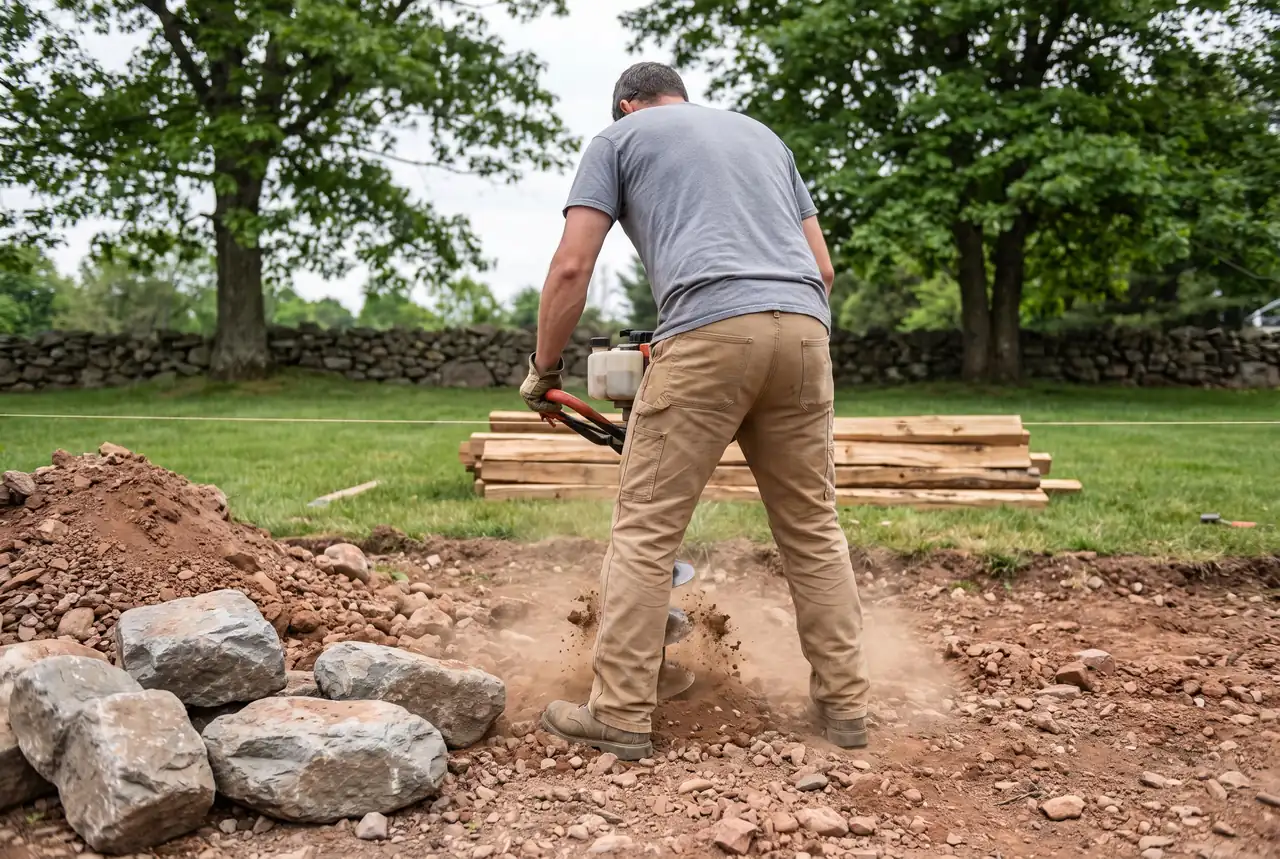
That is why the excavator, the company actually running the auger, places the request. When you hire us, our team files it as part of scheduling your install, and we time the crew’s arrival to fall inside the valid window. If you are digging yourself, for a garden fence you are installing on your own, you make the call.
How far ahead do you need to call PA One Call?
At least 3 business days and no more than 10 business days before excavation begins.
Business days exclude weekends and holidays, so a request on a Thursday afternoon will not clear until the following week. The upper limit matters too: if weather or material delays push a job past the window, the request has to be refreshed. That is one reason fence schedules sometimes shift by a few days even after materials arrive. For the wider picture, see our fence installation timeline.
What the paint and flags mean
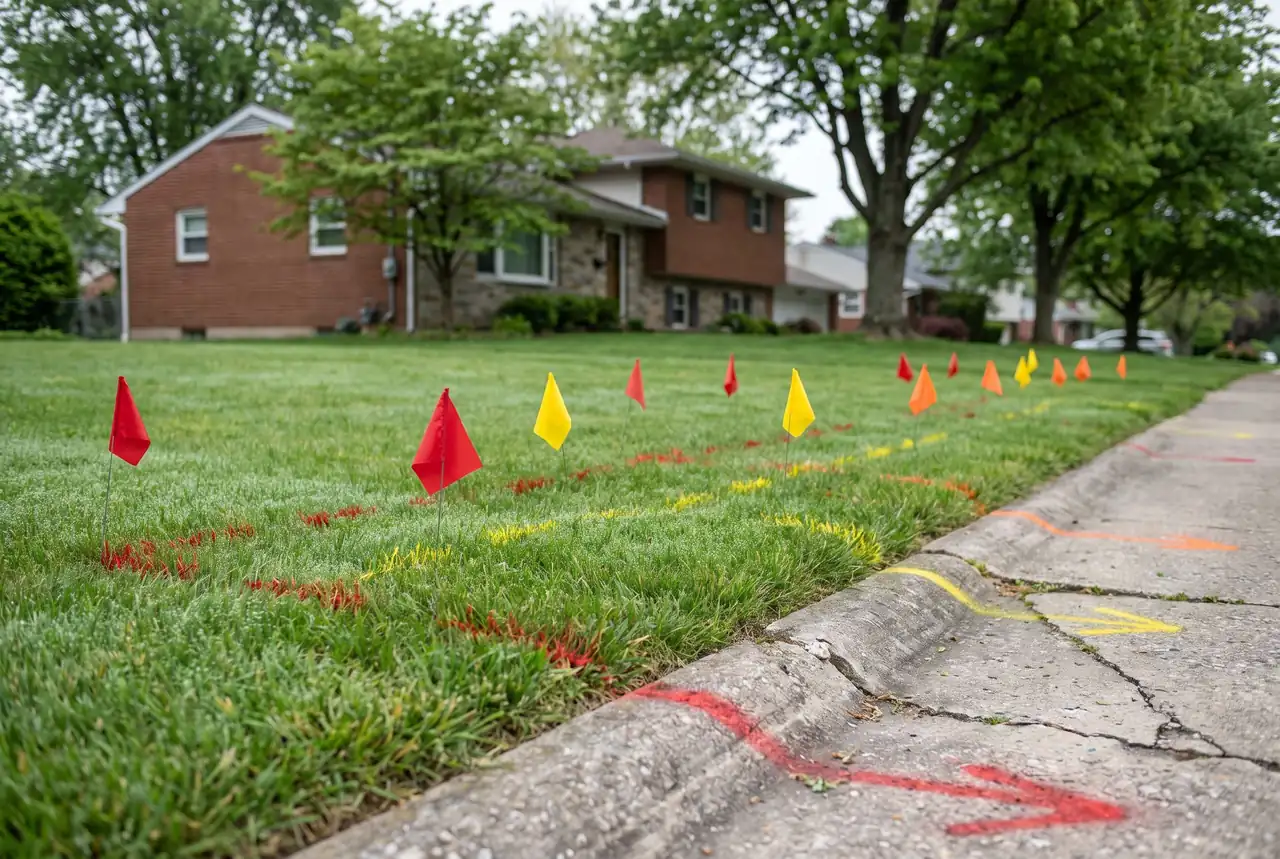
Each utility marks its own lines with a color code on the lawn: red for electric, yellow for gas, oil or steam, orange for communications, blue for water, green for sewer, and purple for reclaimed water. The marks show approximate location, not depth. Leave them in place until the fence is finished; mowing a fresh set of flags is a common way to lose them.
| Color | Facility |
|---|---|
| Red | Electric |
| Yellow | Gas, oil, steam |
| Orange | Communications (phone, cable, fiber) |
| Blue | Potable water |
| Green | Sewer |
| Purple | Reclaimed water |
What does the 18-inch tolerance zone mean for fence posts?
It means no mechanized digging within 18 inches on either side of a marked line. If a post falls there, the crew moves the post or exposes the line carefully by hand first.
On a fence, the easiest fix is usually shifting a post along the line or adjusting a section width so the hole lands outside the zone. Where a line runs parallel and close to the planned fence, the layout may need to move over. We catch these conflicts at the layout stage, which is why the marks need to be down before the string line is pulled.
Which lines will 811 not mark?
Anything privately owned on your side of the meter, which the public utilities do not track.
- Invisible or underground dog fence wire
- Lawn irrigation lines and heads
- Landscape and driveway lighting
- Electric or gas lines to a detached garage, shed, hot tub or pool heater
- Well lines and septic tanks or fields
- Propane lines from a buried tank
Tell us about any of these at the estimate, and find any old plans or contractor drawings you have. A private locating service can mark them if the location is unknown. Invisible fence wire runs along the same lines people want a real fence on; our guide on fences for dogs covers how the two work together.
What if the auger hits something?
Stop digging, and if it is a gas line or the smell of gas appears, leave the area and call 911 and the gas utility.
For other damage, the utility needs to be notified so it can repair the line. More often, the auger meets rock rather than a pipe; schist uplands around West Chester regularly turn up stone, covered in rocky soil and fence posts. For hole depth, see how deep fence posts go in Chester County, and for the install itself, fence installation. Local pages for West Goshen and Exton cover permit details there.
Walk the fence line with us.
A free on-site estimate in West Chester, PA and the surrounding townships. We check the rules for your street, handle the permit and HOA paperwork, and call PA One Call before we dig.
We place the PA One Call request and pull the permit when you hire us, so the paperwork and the paint are both done before the first hole.
Sources & references
Codes and ordinances change. This page is general information, not legal advice; confirm requirements with your municipality.