Short answer: Around West Chester, PA, fence posts are generally set below the local frost line. Reference sources put frost depth near 30 inches in the Philadelphia area and around 36 inches across much of Pennsylvania, and municipalities set their own figure, typically between 30 and 42 inches. Your township’s number, the fence height and the soil all decide the final depth.
Post depth is the part of a fence nobody sees and everybody notices later. A post set too shallow can heave in a hard winter, lean after a summer storm, or let a gate sag. In Chester County, depth also runs into the ground itself: schist and rock in the uplands, limestone and karst in the Chester Valley, and clay soils that hold water. This guide covers frost depth, how fence height changes the answer, and what happens when the ground does not cooperate.
- Frost depth reference: footingdepth.com cites about 30 inches as accepted in the Philadelphia area and 36 inches as typical statewide.
- Who decides: Pennsylvania lets municipalities set frost depth, usually within 30 to 42 inches. Confirm with your township.
- Taller fences go deeper: 6-foot privacy and gate posts carry more wind load than 4-foot picket.
- Rock: where rock stops the auger, a shallower set with more concrete may be accepted, if the local inspector agrees.
How deep should fence posts be in Pennsylvania?
Deep enough to reach below frost and to resist the leverage of the fence above ground. Near West Chester, that commonly means 30 inches or more, and more for tall fences and gates.
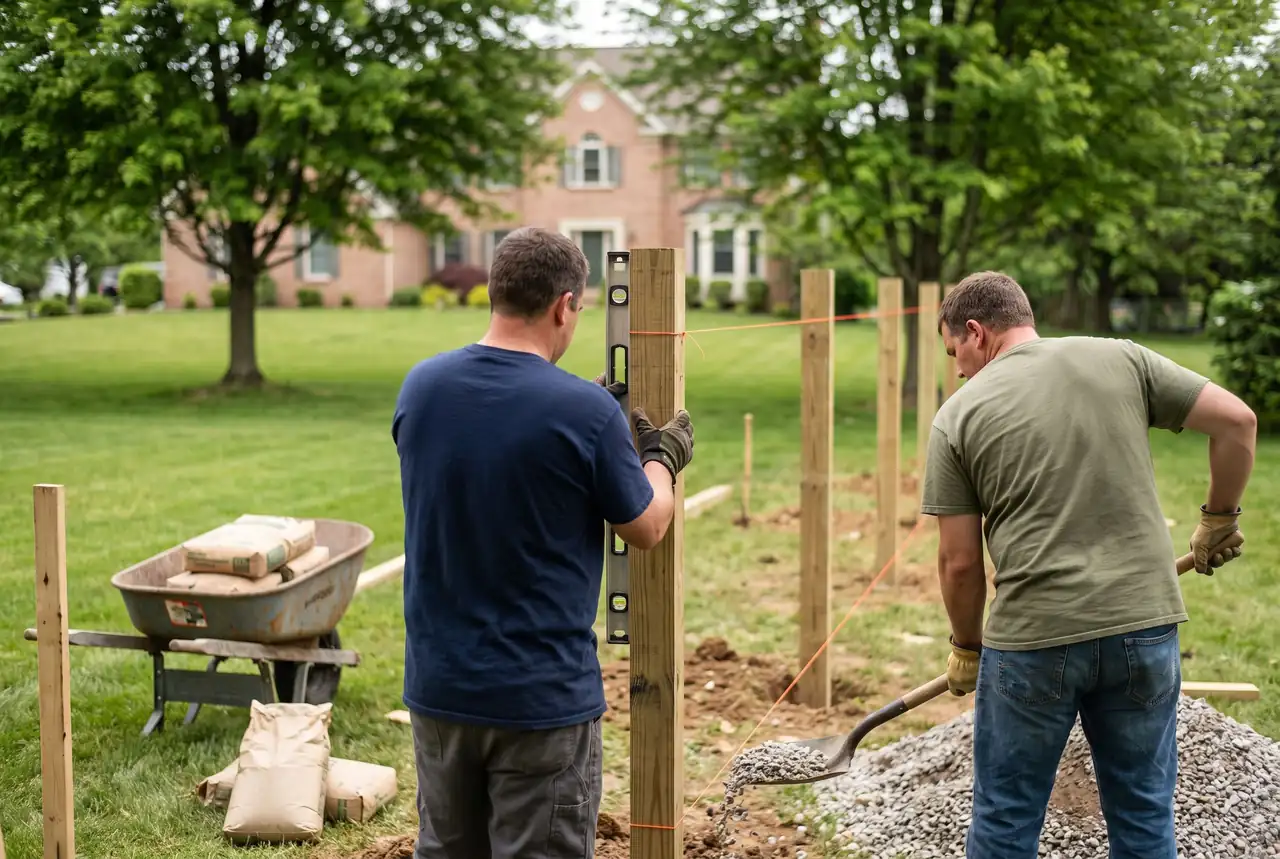
Two forces set depth. Frost heave lifts posts when water in the soil freezes and expands beneath or along them; setting the base below the frost line keeps that frozen layer from getting under the post. Leverage is the other: a 6-foot privacy fence acts like a sail in wind, and the post’s buried length resists it. A common industry rule of thumb sets roughly a third of a post’s total length in the ground, which, for a 6-foot fence, lands in the same range as the frost line. Gate posts carry the weight of a swinging gate as well and are usually set deeper and larger.
| Fence type | Typical approach | Why |
|---|---|---|
| 4-ft picket or aluminum | At or below local frost depth | Low wind load; frost heave is the main concern |
| 6-ft wood or vinyl privacy | Below frost depth, often deeper for line posts in exposed spots | Solid panels catch wind |
| Gate posts | Deeper and heavier than line posts | Gate weight and daily swinging |
| Split rail and post-and-rail | Set firmly, often tamped soil and gravel rather than concrete | Light load; posts can drain and be replaced |
| 8-ft deer fence | Engineered to height; corners and ends braced | Tall mesh fences load the corners |
What is the frost line in Chester County?
There is no single county figure. Each municipality may set its own, so the authoritative number comes from your township’s building code office.
Reference sources put the Philadelphia area at about 30 inches and much of the state at 36, but we do not treat either as the rule for a specific lot. West Goshen’s residential permit materials, for example, did not state a frost depth. When we file a permit, we build to what the township requires, and where nothing is specified, we set posts to the depth the fence’s height and soil call for.
When the auger hits rock
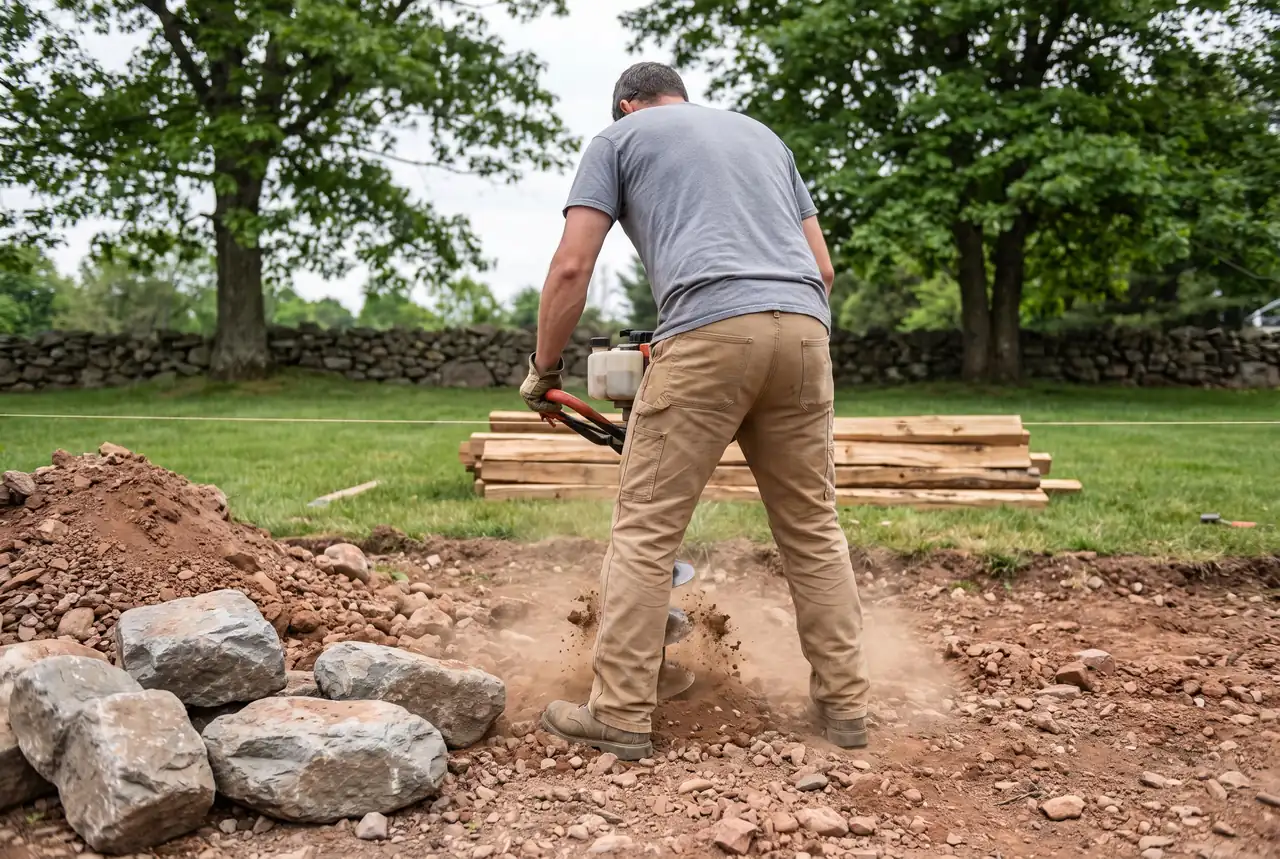
Much of the West Chester area sits on Wissahickon schist and gneiss, and post holes regularly turn up stone. The usual remedies are a rock bar, a core drill or a small jackhammer to reach depth. Where solid bedrock makes full depth impractical, a shallower hole drilled into rock with more concrete can hold well, but that is a decision to make with the inspector, not around them.
Does limestone or sinkhole-prone ground change post depth?
It can. In the Chester Valley around Exton and Malvern, the limestone and dolomite bedrock has developed sinkholes and other karst features, and an auger can meet voids or pinnacled rock.
In those areas, we watch for soft spots and sudden drops while digging, and we avoid directing downspout or roof water toward post footings, since concentrated water is a known trigger for karst problems. Detail is in our sinkholes and fences guide and the Exton page.
Concrete or gravel: what holds posts best?
Concrete for most privacy, pool and gate posts; tamped gravel and soil works well for split rail and many farm fences.
Concrete gives the most rigid set, which tall solid fences and gates need. Gravel drains better and makes future post replacement easier, which suits rail fences. Many installers combine them, with gravel at the base for drainage and concrete above. Whatever the method, the hole needs to be wider at the bottom than at the top, so frost cannot grip a tapered plug and lift it.
Can posts be set in frozen ground?
Often, yes, with the right equipment and concrete practices. See winter fence installation for what changes in cold months, and rocky soil and fence posts for more on stone. Before any hole is dug, utilities must be marked; see calling 811 before a fence. Post setting is part of every fence installation and many fence repairs, and the West Goshen page covers permits there.
Walk the fence line with us.
A free on-site estimate in West Chester, PA and the surrounding townships. We check the rules for your street, handle the permit and HOA paperwork, and call PA One Call before we dig.
Rules change, so confirm with the township — when you hire 76 FENCE West Chester, we pull the permit and set posts to the depth your township and your soil require.
Sources & references
Codes and ordinances change. This page is general information, not legal advice; confirm requirements with your municipality.