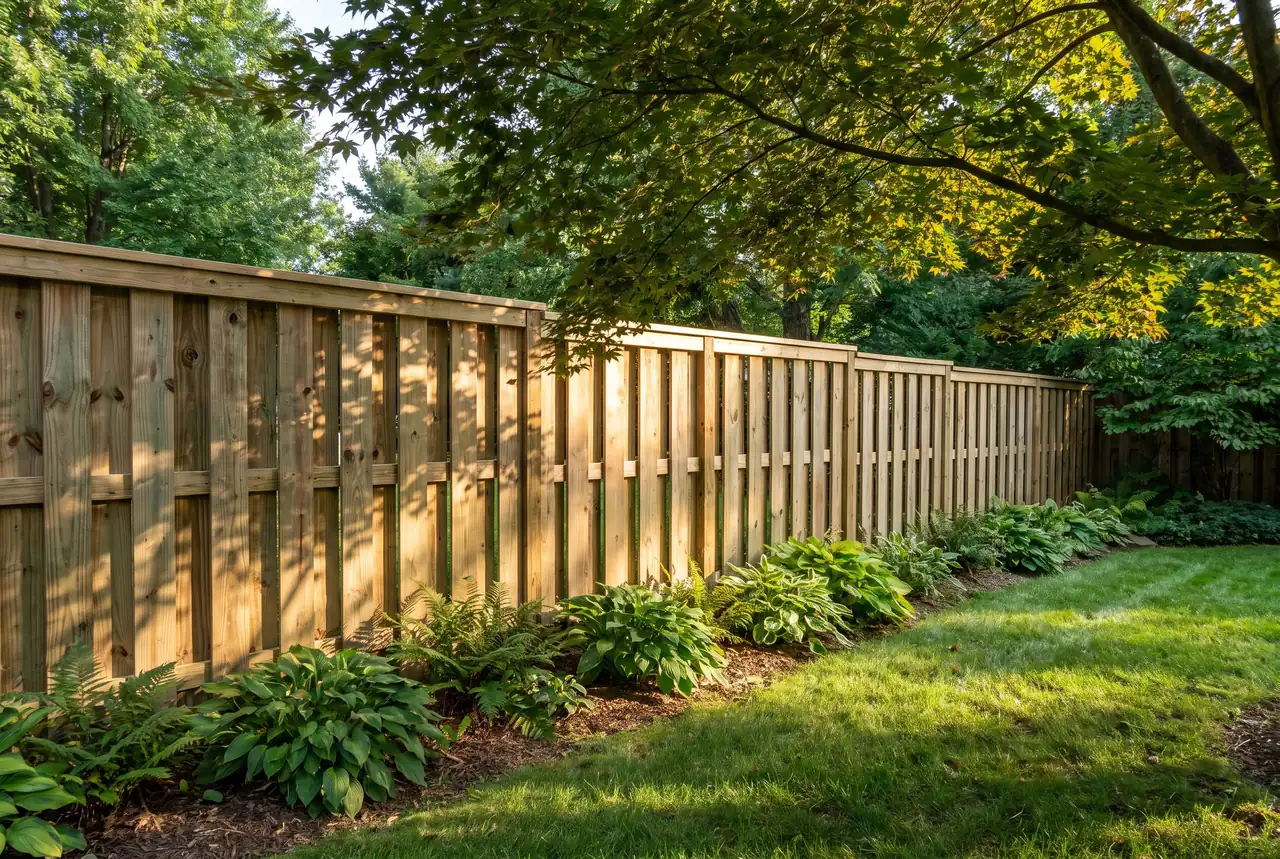
Short answer: In several townships around West Chester, PA, the finished side of a fence must face out, toward the neighbor or the road. Westtown, Thornbury and East Whiteland write this into their codes, and Kennett requires the structural side to face your own lot. Where no code applies, facing the good side out is still the norm, and many HOAs require it.
Every wood privacy fence has two faces: a smooth side showing only boards, and a side showing posts and horizontal rails. Which way it faces is not just etiquette here. A handful of Chester County townships have turned “good side out” into a written rule, and getting it backwards can mean rebuilding sections after an inspection. This page explains where the rule applies, why it exists, and how to get a fence that looks finished from both sides.
- Westtown: the finished or smoother side must face the abutting lot or road (§ 170-1505).
- Thornbury (Chester Co.): finished side toward the neighbor or public, unless the Supervisors grant a waiver.
- East Whiteland: finished side faces the neighbor or right-of-way; supports face inward (§ 200-93).
- Kennett Township: the visible structure faces the interior of the lot (§ 240-2018(D)).
- Elsewhere: no code rule found, but HOA covenants frequently cover it.
Which side of the fence faces the neighbor in Chester County?
The finished side, in every township we found that addresses the question.
The wording varies but the result is the same. Westtown says the finished or smoother side faces the abutting lot or road. Thornbury says the finished side faces the neighbor or the public, and only the Board of Supervisors can waive it. East Whiteland adds that supports face inward. Kennett phrases it from the other direction: the visible structure faces the interior. For a typical dog-ear privacy fence, that means you see posts and rails from your patio, and your neighbor sees clean boards.
| Municipality | Rule | Code reference |
|---|---|---|
| Westtown | Finished/smoother side faces abutting lot or road | § 170-1505 |
| Thornbury (Chester Co.) | Finished side toward neighbor/public; waiver possible from Supervisors | Chapter 76 |
| East Whiteland | Finished side faces neighbor/right-of-way; supports inward | § 200-93 |
| Kennett Twp | Visible structure faces the interior | § 240-2018(D) |
| West Goshen, East Bradford, the borough and others | No good-side rule found in the sections we reviewed | Check HOA covenants |
Why do townships require the good side out?
Because the neighbor and the street have to look at the fence too, and the owner is the one who chose it.
There is also a practical reason. With posts and rails on your side, the fence is easier for you to inspect, re-fasten and stain without stepping onto your neighbor’s property. A rail-side-out fence also gives a climber a ladder on the outside, which matters for security and for pool barriers. Where a fence sits close to the line, as Thornbury’s 6-inch setback allows, maintenance access from your own side is worth a lot.
Fences with two good sides
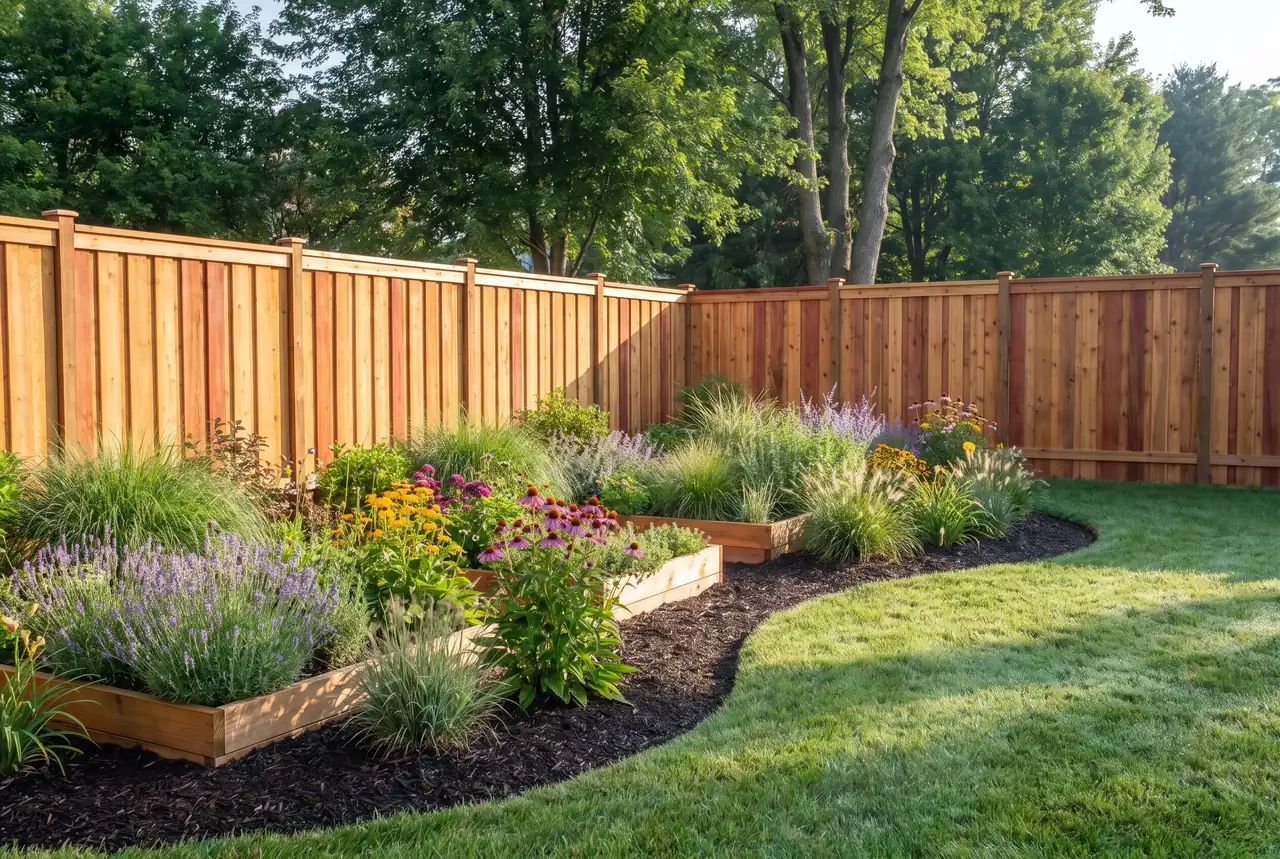
The easiest way to make the question disappear is to choose a design that looks finished from both faces. Board-on-board cedar overlaps boards on alternating sides of the rail. Shadowbox alternates boards so each side shows the same pattern. Most vinyl privacy panels sandwich the rails inside the panel, so both sides match. Aluminum, ornamental steel and chain link are effectively the same from either side.
What if you want the smooth side facing your own yard?
In Westtown, Thornbury, East Whiteland and Kennett, a one-sided fence must face out. If you want a clean view from your side as well, choose a two-sided style.
Some homeowners add a second layer of boards to the inside of the rails, but that adds weight and cost, and it is usually simpler to pick a design built for both faces from the start. Compare options on our semi-privacy fence, cedar fence and vinyl fence pages.
What if your neighbor’s fence already shows you its rails?
If it was built before the rule applied, or in a township without one, it may be allowed to stay. Ask the township before assuming it is a violation.
The friendlier fix is usually a conversation. If the posts and rails are on your side, you can plant in front of them, or, with the neighbor’s written agreement, a new fence can replace the old one along the shared line. Do not attach your own boards or panels to a neighbor’s fence without permission: it adds load to posts you do not own and blurs who is responsible for the fence later. If you are building next to an existing fence, our crew can set your new line just inside your property so the two stand independently, which keeps future repairs simple for both households.
Does facing the good side out mean the neighbor owns the fence?
No. Orientation does not decide ownership; where the fence sits and who paid for it do.
A fence built entirely on your land is generally yours, whichever way it faces. Ownership questions come up most often between twins and rowhomes, covered in shared fences for twins and rowhomes. For how close to the line you can build, see fence property line rules in PA. Township details are on our Westtown and Thornbury pages, and the HOA side is covered by our HOA approval service.
Walk the fence line with us.
A free on-site estimate in West Chester, PA and the surrounding townships. We check the rules for your street, handle the permit and HOA paperwork, and call PA One Call before we dig.
Rules change, so confirm with the township — when you hire 76 FENCE West Chester, we pull the permit and build the fence facing the way your code requires.
Sources & references
- Westtown Township Code § 170-1505
- Thornbury Township Code, Chapter 76
- East Whiteland Township Code § 200-93
- Kennett Township — Fence Permit Information
Codes and ordinances change. This page is general information, not legal advice; confirm requirements with your municipality.