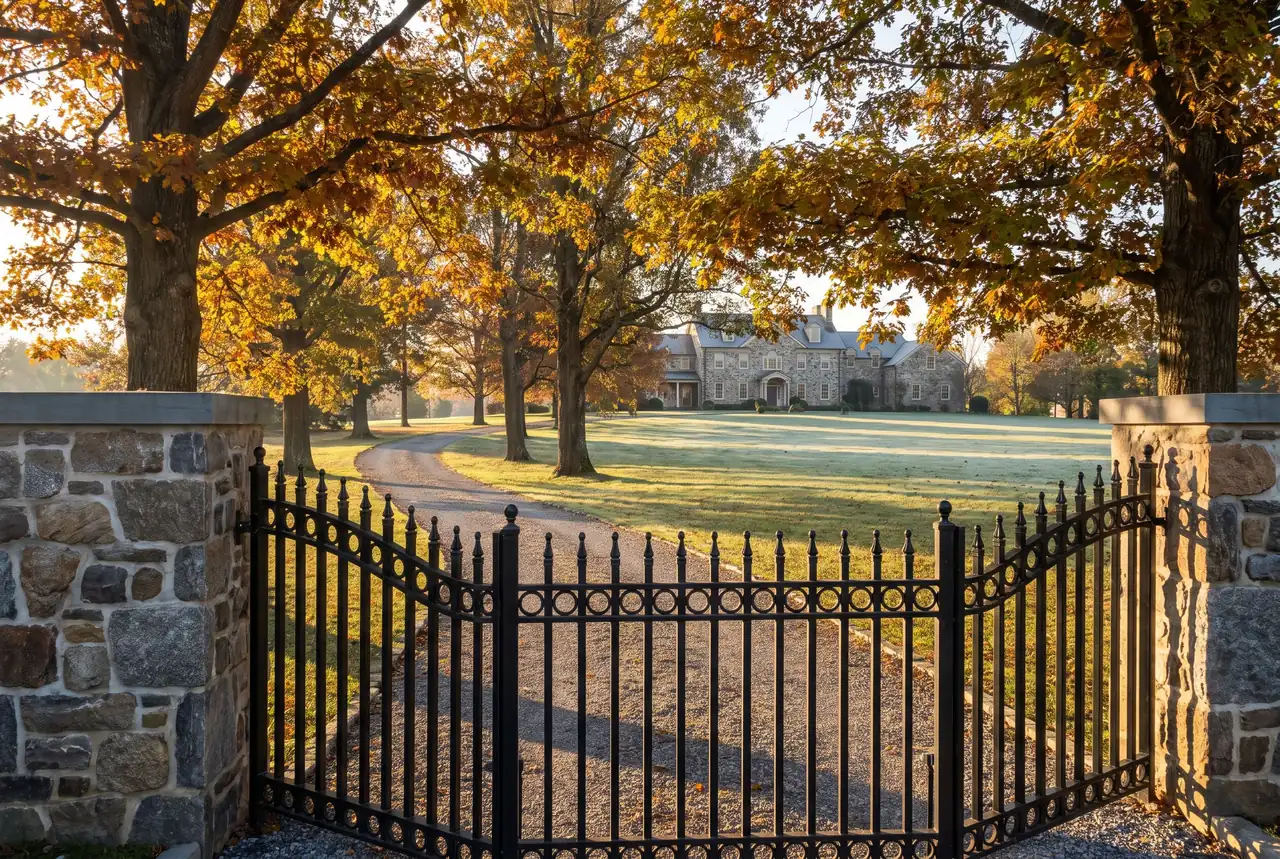
Short answer: Ornamental steel is the heavier, more rigid alternative to aluminum. In West Chester, PA it is chosen for estate frontages, stone-pillared entrances, driveway and automatic gates, and business perimeters where strength matters more than weight. It carries the look of traditional iron, but unlike aluminum it depends on an intact protective coating to keep rust away, so it needs periodic inspection.
Out along the lanes of Birmingham, Pocopson and Willistown, where houses sit well back from the road behind stone walls and pillars, the fence at the entrance often has to look substantial and hold a heavy gate. That is where ornamental steel comes in. 76 FENCE West Chester installs ornamental steel fencing and gates for homes and businesses across West Chester, PA and the surrounding townships.
Steel or aluminum: what is the real difference?
Steel is stronger and stiffer; aluminum is lighter and cannot rust. Both can be made to look like traditional iron, so the choice is mostly about load, impact and upkeep.
Strength
Steel pickets and rails resist bending and impact better, which matters for security fencing and for wide gates that must stay straight over time.
Weight
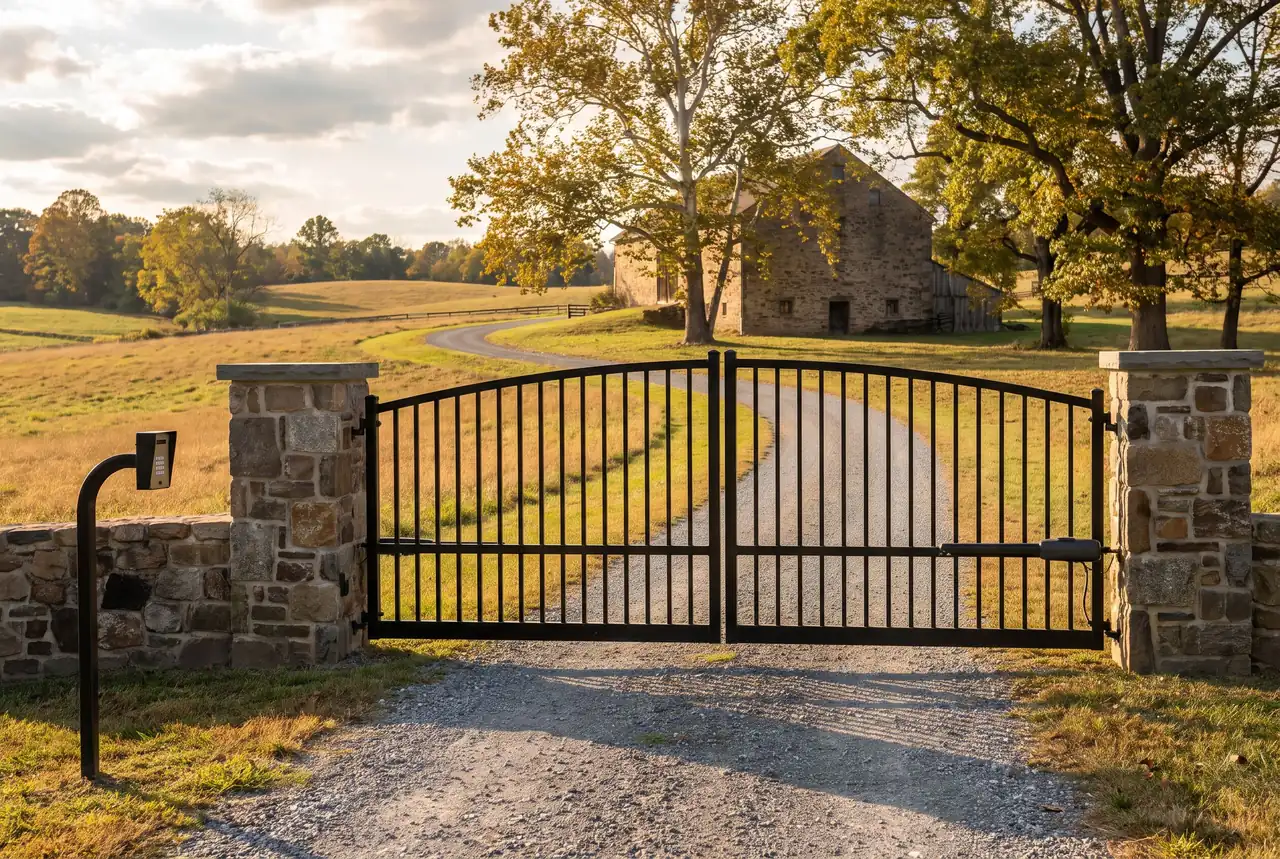
Steel’s mass makes it the natural partner for heavy swing gates hung on stone pillars and for automatic gate operators.
Corrosion
Aluminum does not rust. Steel relies on galvanizing and a powder coat; a deep chip that is left open can let rust start.
Upkeep
Both need only washing and touch-ups; with steel, those touch-ups matter more. See aluminum fencing for the lighter option.
On cost, the useful published comparison is with real wrought iron: HomeGuide puts wrought iron at roughly $50 to $85 per installed foot nationally and ornamental aluminum at about $40 to $75. Local quotes depend on height, gates, pillars and site conditions, and the free estimate gives you a real number. See aluminum vs. wrought iron for a fuller comparison.
Where does steel make sense around West Chester?
Steel earns its price where a fence takes force or carries weight.
- Estate frontages with stone pillars and a long, straight run along the road.
- Driveway and farm-lane gates, especially with an operator; see automatic gates.
- Business parks and offices along the Route 100 and 202 corridors that need a secure perimeter without the look of chain link.
- Historic properties where the owner wants the weight and profile of traditional iron.
How do freeze-thaw and road salt affect steel?
The coating is the steel’s protection, so winter is mostly a test of the finish and the footings.
Salt spray from plowed roads and treated sidewalks settles on the lower rails of fences close to the street, and repeated freeze-thaw cycles can widen any chip in the coating. A spring rinse and a walk along the fence to touch up nicks keeps small problems small. Typical guidance for metal fences is 20 to 30 years or more, with finish touch-ups every 3 to 5 years.
Below grade, posts are set to the frost depth your municipality requires. That matters even more for steel, because a heavy gate post that heaves a quarter inch is enough to make an automatic gate bind.
How tall can a steel fence be?
For homes, usually 6 feet in side and rear yards and lower and open in front. Commercial and industrial properties often get more height, with conditions.
A few current examples: West Goshen allows side and rear fences up to 10 feet on non-residential property. West Whiteland, which covers much of Exton, caps fences in required yards at 6 feet, and anything above 6 feet must be at least 50% non-opaque, with an absolute maximum of 12 feet. In West Chester Borough’s commercial districts, a front-yard fence over 6 feet is allowed only if the part above 6 feet is at least four parts open to one part solid. An open ornamental steel fence is well suited to those openness rules. Our commercial fencing and security fence pages go further.
What should you decide before ordering steel?
A handful of choices drive both the look and the price, and they are easiest to settle at the walkthrough.
- Picket top. Flat, pressed point or spear. Spears look traditional; flat tops are friendlier where children or dogs play.
- Height and rails. Two-rail or three-rail panels, and whether the bottom rail needs to sit close to grade to keep small dogs in.
- Gate swing. A driveway that slopes up from the road may need a gate that swings outward, slides, or is split into a pair.
- Pillars and posts. Whether existing stone pillars can carry the gate, or whether steel posts set beside them should take the load.
- Finish color. Black is the default; bronze and other colors may be available depending on the product line.
Is steel appropriate in the historic district?
It can be. Iron-look metal fencing is generally considered compatible with historic houses. Downtown, steel facing the street inside the historic district may need HARB review on top of zoning, which we verify before fabrication. See the historic district page for more.
Walk the fence line with us.
A free on-site estimate in West Chester, PA and the surrounding townships. We check the rules for your street, handle the permit and HOA paperwork, and call PA One Call before we dig.
Sources & references
- West Whiteland Township Code § 325-29 (fences)
- West Chester Borough Code § 112-804 (height limitations)
- West Goshen Township Ordinance 12-2024 (fences)
- HomeGuide: Metal fence cost (2026)
Codes and ordinances change. This page is general information, not legal advice; confirm requirements with your municipality.