
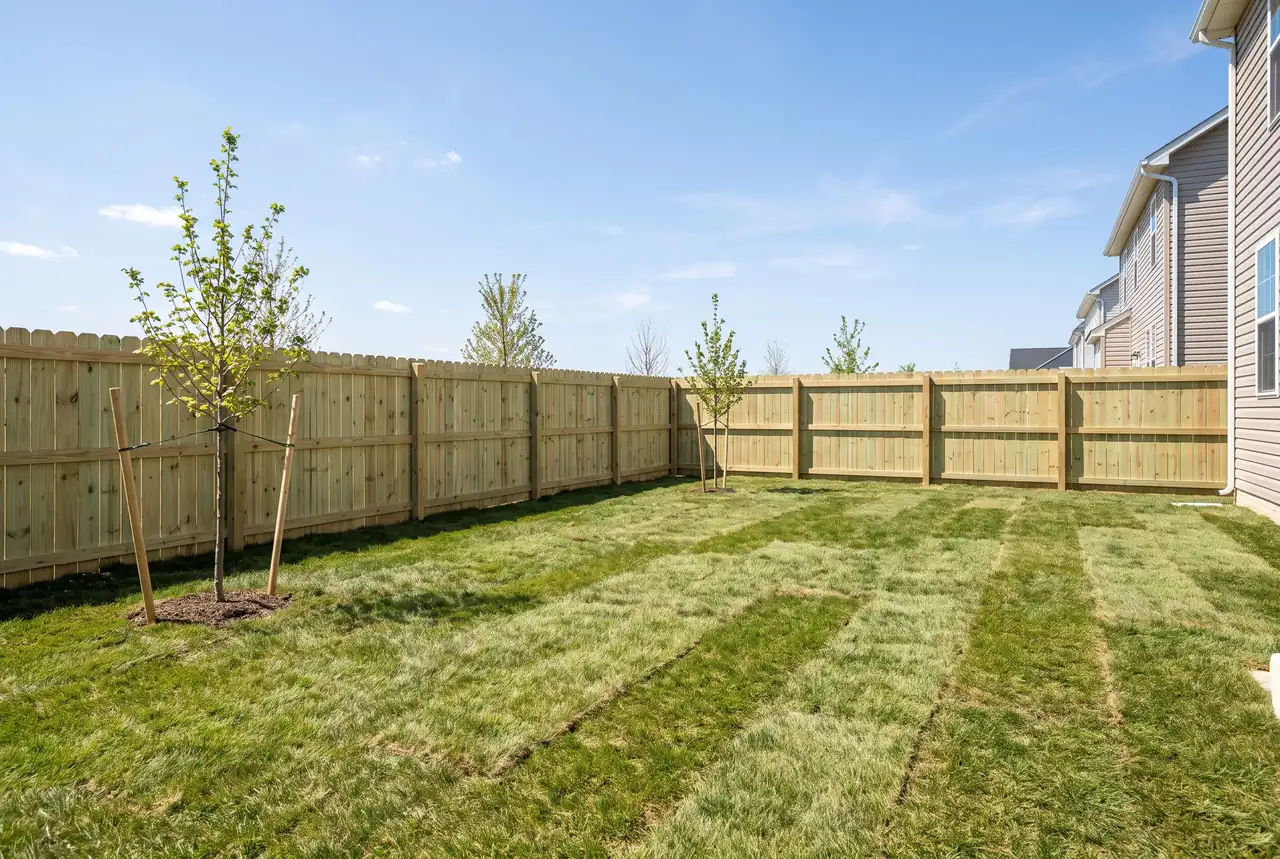
Short answer: 76 FENCE West Chester replaces worn-out fences in West Chester, PA from tear-out to final walkthrough. We remove the old fence, confirm the line and current township rules, file any permit, and install the new one. Replacement usually beats repair when rot or leaning is widespread, parts are discontinued, or the old fence no longer fits how you use the yard.
Replacing a fence in West Chester, PA is not just a new install with a demolition day tacked on. The old fence may sit a few inches off the true line, its posts may be set in concrete that has to come out, and the rules it was built under may have changed. West Goshen, for example, only began requiring permits for fences in 2023. Our team treats a replacement as a fresh project that happens to start with a cleanup.
When is it time to replace instead of repair?
When the problems are spread across the fence rather than isolated, or the material has simply reached the end of its useful life.
The 76 FENCE brand’s typical lifespan guidance gives a useful benchmark: wood around 15 to 20 years, chain link 15 to 20 years or more, metal 20 to 30 years or more, and composite around 20. Care and site conditions move those numbers in either direction. The signs below are what we look for at a walkthrough.
| Material | Typical life (brand guidance) | Signs replacement is near |
|---|---|---|
| Wood (pine, cedar) | 15–20 years | Soft or crumbling posts at grade, many split boards, rails pulling off |
| Chain link | 15–20+ years | Rusted mesh and fittings, sagging line, bent posts in several spots |
| Metal (aluminum, steel) | 20–30+ years | Widespread corrosion, broken welds, posts heaved out of line |
| Composite | About 20 years | Warped boards, failing posts or brackets across multiple sections |
| Vinyl | Varies by product | Cracked, brittle panels, discontinued style with no matching parts |
If only a post or a gate is the issue, start with our fence repair page instead.
What happens on replacement day?
Removal and installation usually happen in one continuous project, so your yard is not left open longer than necessary.
- Confirm the line. Before anything comes down, we compare the old fence to your plot plan or survey pins. If the existing fence was off, the new one does not have to repeat the mistake.
- Mark utilities. Our team files the PA One Call request three to ten business days ahead. New post holes may land in different spots than the old ones.
- Tear out and haul away. Panels, rails and posts come out, including old concrete footings where they would interfere with new posts.
- Set new posts. The crew lays out a fresh string line and sets posts at the spacing the new material needs, which is rarely the same as the old fence.
- Install and walk through. Panels, gates and hardware go on, and we walk the finished fence with you.
Can the new fence go exactly where the old one was?
Often, but not automatically. A fence that has stood for twenty years was built under older rules and may not reflect the true property line.
Three things can change the answer. First, the line itself: if your fence is close to a neighbor, a PA-licensed surveyor pinning the corners removes the guesswork. Second, current code: Thornbury Township requires fences to sit at least six inches inside the property line unless the neighbor agrees in writing, and several townships limit front-yard fences to open styles at four feet or so. Third, the finished side: Westtown, Thornbury and East Whiteland write into code that the finished side faces the neighbor or road. Our guide on whether you need a survey covers the first point in depth.

Is replacement a chance to change material or height?
Yes, and it is the best time to do it. You are already paying for removal and layout.
Homeowners commonly swap aging wood for vinyl to cut maintenance, move from chain link to black aluminum for a cleaner look, or add height for a new dog. Each change has rules attached. Side and rear yards top out at six feet in most nearby townships, and taller fences may need a building permit or variance. Compare options on our vinyl vs. wood comparison and the materials overview.
Does a replacement fence need a permit?
In many municipalities, yes. Treat it as a new fence when you check.
West Goshen requires a zoning permit for every fence, and Westtown’s code explicitly covers installation or replacement of fences over 40 feet long. We confirm the requirement with your township and file the application. The permit service page explains what we prepare.
What does replacement cost?
It depends on the length, material, gates and how much old material comes out; the free estimate gives you a real number.
HomeGuide’s cost guide lists old fence removal at roughly $10 to $20 per foot nationally, on top of the new fence. Local quotes depend on your yard. A replacement can be financed through Wisetack, including interest-free plans up to 24 months for projects from $500 to $25,000, subject to credit approval. See financing for details, or call or text 484-999-0965.
★★★★★I contacted several fence companies prior to selecting 76 Fence and so glad that I did. They are very responsive and customer focused. They came on time, provided frequent project status updates and followed up on any issues in a timely manner. The fence turned out exactly as we had hoped. Good quality work at a fair price.
★★★★★Received 6 estimates for my fence job. Chose 76 because of the presentation during my walk through. The customer service was excellent and they handled our request very professionally and with extraordinary patience.
★★★★★Andrew Taylor explained everything clearly, answered all of my questions, and made sure I understood the best options for my property and budget. He is approachable, professional, and his pricing is very fair.
Walk the fence line with us.
A free on-site estimate in West Chester, PA and the surrounding townships. We check the rules for your street, handle the permit and HOA paperwork, and call PA One Call before we dig.
Sources & references
- Westtown Township Code § 170-1505
- Thornbury Township Code, Ch. 76 Fences
- HomeGuide fence installation cost
Codes and ordinances change. This page is general information, not legal advice; confirm requirements with your municipality.