
Short answer: Often yes, but with limits. Near West Chester, PA, East Bradford and Chadds Ford keep new construction at least 50 feet from the top of a stream bank, and floodway rules restrict fences that could trap debris. Open styles like split rail set back from the bank are the usual answer. Check with the township before planning any fence along water.
Creek frontage is one of the most beautiful features a property in West Chester, PA can have, and one of the most regulated. The East and West Branches of the Brandywine meet south of the borough, and Chester Creek, Pocopson Creek and the headwaters of Ridley Creek run through the surrounding townships. If your yard slopes toward any of them, read this before you sketch a fence line.
What is a riparian buffer?
A riparian buffer is the strip of land along a stream that is kept vegetated to filter runoff, shade the water and hold the bank together. Some townships protect it in their zoning codes. East Bradford has a Riparian Buffer Area Conservation District that prohibits new construction within 50 feet of the top of bank, and Chadds Ford applies a 50-foot riparian setback.
Whether a particular fence counts as “construction” under those provisions is a question for the township; we have not confirmed a blanket answer, and it may depend on the fence type and location. Treat the 50-foot line as the starting assumption.
- Riparian setback: 50 feet from top of bank in East Bradford and Chadds Ford.
- Floodways: fences that can catch debris are restricted; East Bradford’s fence page references floodway limits.
- Local waters: Brandywine Creek (East and West Branches), Chester Creek, Pocopson Creek, Ridley Creek headwaters.
- County planning: Chester County’s Watersheds 2045 plan.
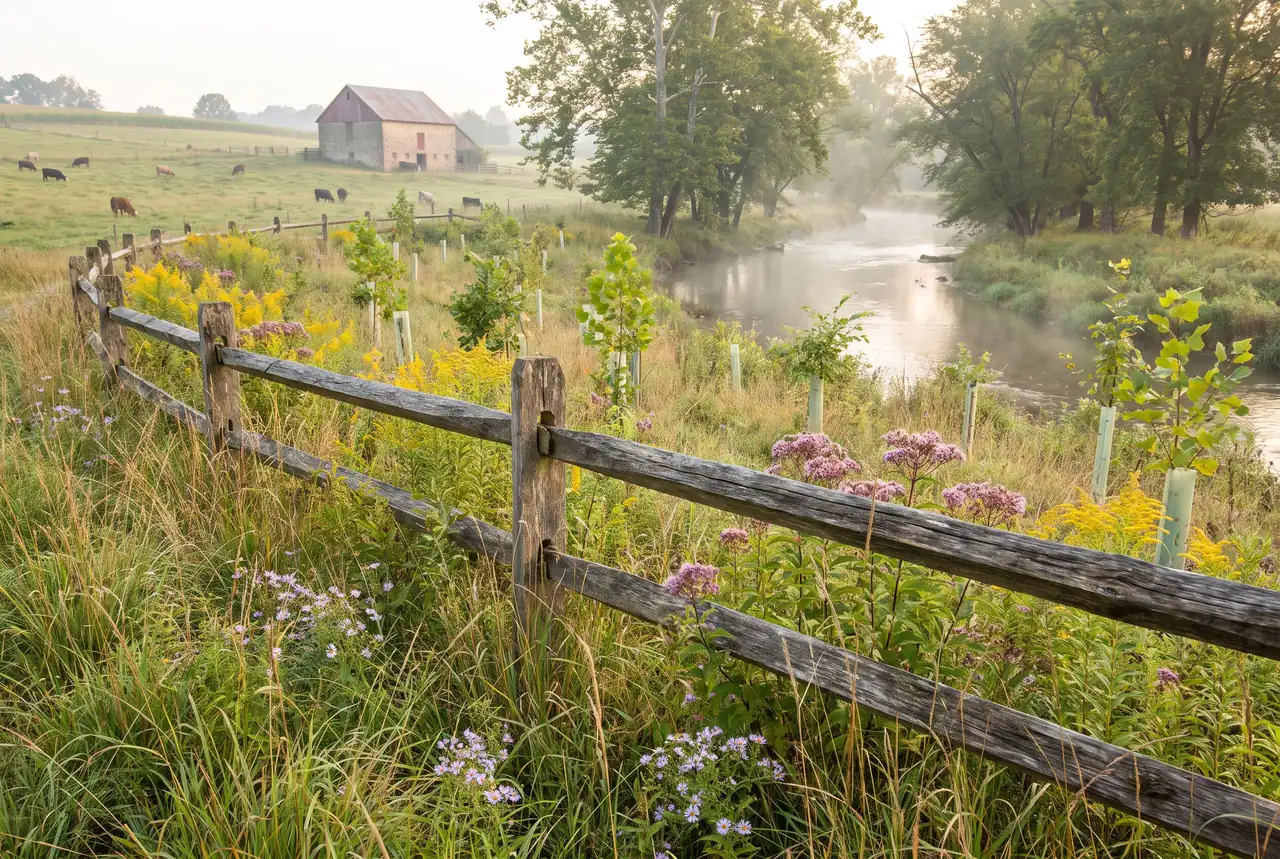
- Safest style: open fencing set back from the bank, oriented to let water pass.
Why do floodways restrict fences?
Because a fence across moving floodwater acts like a net. Leaves, branches and trash pile against it, water backs up, and the fence can fail or push flooding onto a neighbor. That is why floodway rules focus on fences that can trap debris, and why a solid privacy fence across a flood path is a poor idea even where it is technically allowed.
Choosing a fence for creekside land
- Keep the fence out of the mapped floodway where possible.
- Run fence lines parallel to the flow, not across it.
- Prefer open styles such as split rail or post-and-rail.
- Avoid fine mesh or solid panels in low areas that flood.
- Plan for access to the bank for maintenance and plantings.
- Leave existing streamside trees and shrubs in place.
Which townships around West Chester have creek frontage?
East Bradford has long stretches of Brandywine frontage west of the borough. Pocopson sits where Pocopson Creek joins the Brandywine. Chadds Ford follows the Brandywine south toward Delaware. Chester Creek and Ridley Creek touch the townships to the east, including parts of Westtown, Thornbury and Willistown.
What should you know before talking to the township?
A short list of facts makes the zoning conversation faster: the approximate distance from your proposed fence line to the top of the bank, whether the area floods in heavy storms, the fence height and style, and whether the fence runs across or along the direction of flow. A rough sketch on a plot plan or an aerial photo helps. If you have a recent survey, it may already show the stream and floodplain lines.
It also helps to think about what the fence is for. Keeping a dog close to the house, protecting a garden from deer and marking a boundary along the water are different goals, and each one can usually be met with a shorter or more open fence than a full perimeter.
Does East Bradford require a fence permit near the creek?
East Bradford generally does not require a township permit for fences 6 feet and under; taller fences need a building permit and engineered plans. Near the Brandywine, though, the riparian buffer district, floodway limits and scenic-road restrictions can apply regardless of height. The zoning office is the right place to confirm before any work.
What about horses and livestock near streams?
Keeping animals out of streams protects both the banks and the water quality. On farm properties, a board or post-and-rail fence along the buffer line, with a crossing or water source planned deliberately, is a common pattern. West Bradford’s code, for example, requires grazing and pasture areas to be fenced. Our horse and farm fencing page covers board and rail options.
Is preserved creekside land treated differently?
It can be. Much of the land along the Brandywine is under conservation easements, which may have their own rules about new structures and fencing in addition to township zoning. If your deed references an easement, read our conservation easement guide and contact the easement holder before planning.
How do we plan a fence near water?
We start by locating the top of bank and any mapped floodplain, then mark a fence line that respects the buffer. From there we pick a material, usually split rail or open board, and confirm the plan with the township. Rules change, so confirm with the township — when you hire us, we pull the permit.
Walk the fence line with us.
A free on-site estimate in West Chester, PA and the surrounding townships. We check the rules for your street, handle the permit and HOA paperwork, and call PA One Call before we dig.
Sources & references
- East Bradford Township — Fences
- Chadds Ford Township Code
- West Bradford Township Code § 450-62
- Brandywine Conservancy
Codes and ordinances change. This page is general information, not legal advice; confirm requirements with your municipality.