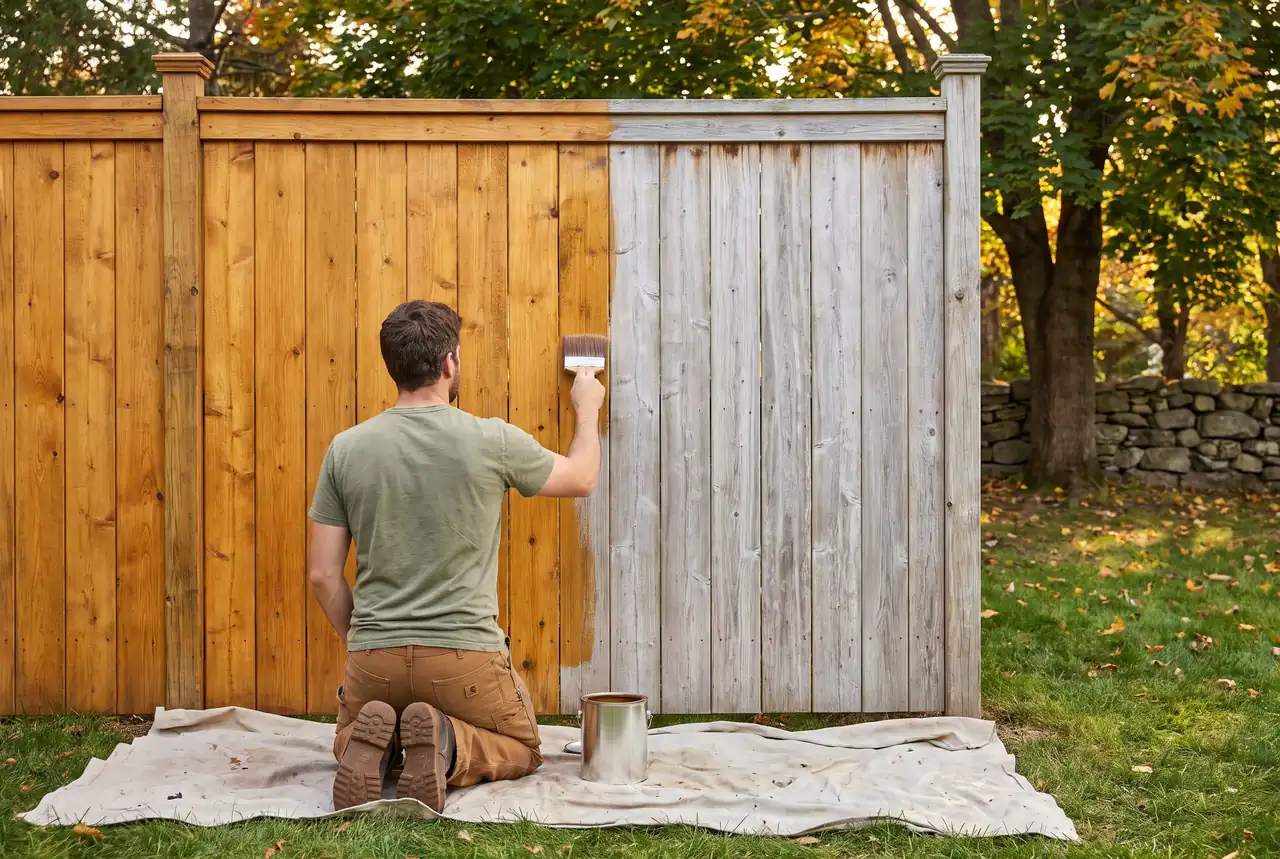
Short answer: In West Chester, PA, check posts and gates each spring after the freeze-thaw season, wash vinyl and coated fences once a year, re-treat wood every two to three years in dry summer or early fall weather, clear leaves and vines in autumn, and keep snow piles and salt off the fence in winter. Touch up metal every three to five years.
Fences in West Chester, PA rarely fail all at once. They fail by small steps: a post that heaves a little one winter, mildew that creeps up a shaded run, a vine that pulls a board loose, a gate that sags until the latch no longer catches. A simple calendar catches each of those early. The intervals below follow 76 FENCE’s general guidance; your fence’s manufacturer may have its own care instructions, which are worth following for warranty purposes.
- Wash: once a year, all materials.
- Wood: re-treat or re-stain every 2–3 years.
- Metal: touch up finish every 3–5 years.
- Typical lifespans: wood 15–20 years, chain link 15–20+, metal 20–30+, composite around 20.
- Pool gates: test self-closing and self-latching function before every swim season.
What should you check in spring?
Movement from winter. Freeze-thaw cycles are hardest on posts, so spring is the time to look for leaning sections, gates that no longer latch, and posts that have risen slightly. It is also the best time to wash.
- Sight down each run for leaning or wavy lines.
- Open and close every gate; check hinge screws and latch alignment.
- Wash vinyl, composite and coated chain link to remove winter grime and mildew.
- Look for cracked vinyl or split boards from winter impacts.
- Pull back mulch and soil that crept against the bottom of the fence.
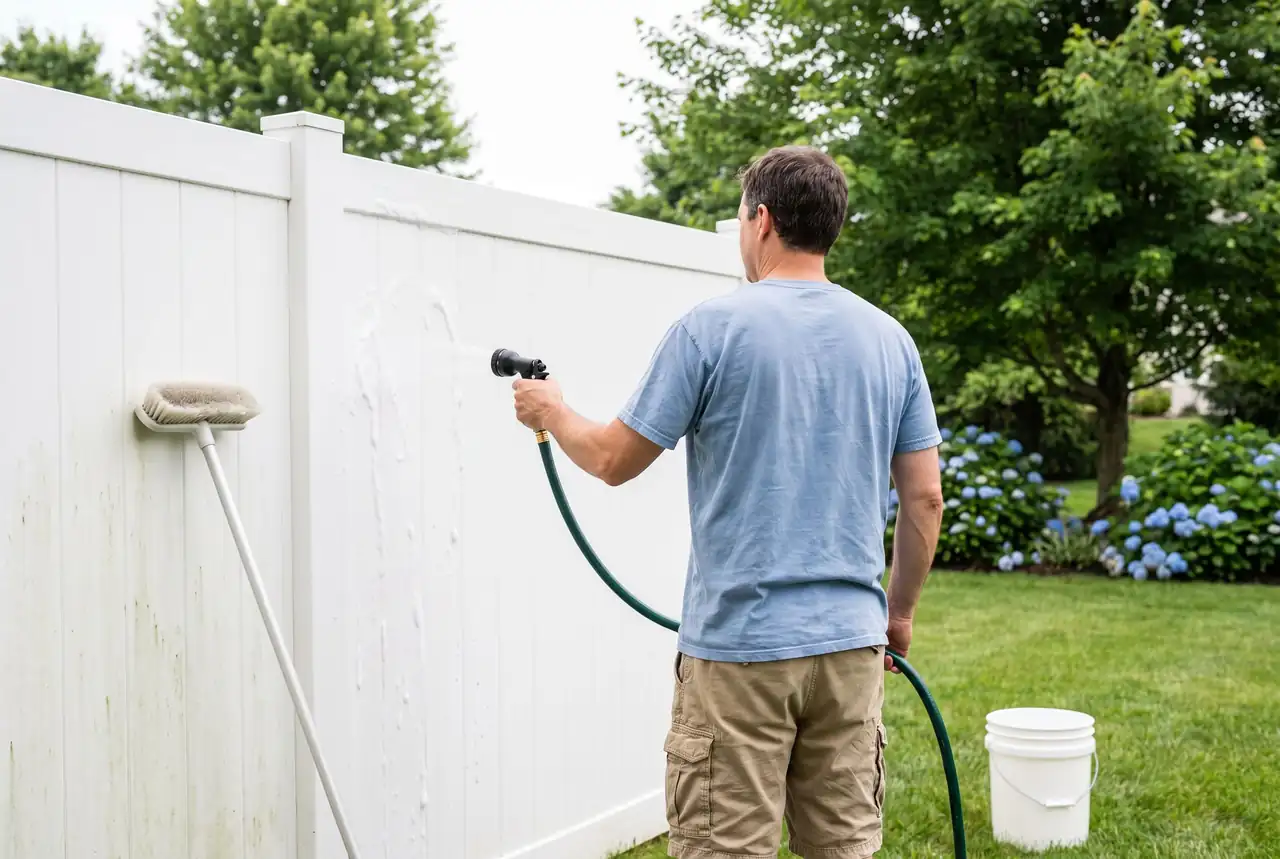
How do you clean green mildew off vinyl?
With a soft brush or sponge, mild soap and water, then a thorough rinse. A garden hose is usually enough; if you use a pressure washer, keep it on a low setting and at a distance so you do not etch the surface or force water into rails. Shaded, north-facing runs grow mildew fastest, so they may need attention more often. Avoid harsh solvents that can dull the finish.
What does a fence need in summer?
Summer is pool season and staining season. Before the pool opens, test every pool gate: it should close on its own from any open position and latch without help. The 2018 ISPSC, which Pennsylvania’s code adopts, requires pool gates to be self-closing and self-latching and to open outward away from the pool; see our PA pool fence code guide.
For wood, the right window for re-treating is a stretch of dry days, after the fence has dried out from rain and before the hottest afternoons. Clean first, let it dry, then apply stain or sealer. Our wood fencing page and cedar page cover finish choices.
What should you do in fall?
Clear and prepare. Leaves piled against a fence hold moisture against the bottom boards and posts through the winter. Vines such as English ivy and wild grape add weight and pry boards apart. Fall is also a good time to trim limbs that overhang the fence before ice storms arrive.
- Rake leaves away from the fence line.
- Cut back vines and pull them off panels.
- Trim dead or overhanging limbs.
- Check that downspouts and sump lines discharge away from posts.
- Lubricate gate hinges and latches before cold weather.
How do you protect a fence in winter?
Mostly by keeping things off it. Do not pile plowed or shoveled snow against the fence; the weight and the meltwater both cause damage. Aim snowblower discharge away from panels, especially vinyl, which is stiffer and more likely to crack in hard cold. Keep de-icing salt away from metal posts and footings where you can. After ice storms, walk the line and look for limbs resting on panels.
What does each material need over the year?
| Material | Every year | Every few years |
|---|---|---|
| Vinyl | Wash; check panels and gates | Replace cracked parts as needed |
| Wood (pine or cedar) | Wash; tighten fasteners; clear soil from boards | Re-treat or re-stain every 2–3 years |
| Aluminum and steel | Wash; check gate hardware | Touch up finish every 3–5 years |
| Chain link | Wash coated fabric; check ties and tension | Re-tension or replace ties as needed |
| Composite | Wash; watch shaded runs for mildew | Follow the manufacturer’s care guidance |
When should a repair be called in?
When a post moves when you push it, a section leans noticeably, a gate drags or will not latch, or a storm drops a limb on the fence. Small problems are cheaper to fix early, and a leaning post can take neighboring sections with it. Our fence repair and maintenance pages explain what we can help with, and storm damage repair covers fallen trees and wind.
Does maintenance differ by neighborhood?
Somewhat. Wooded lots in Westtown and Birmingham see more leaf litter, shade and limb damage. Borough rowhome yards stay damp and shaded between buildings, which favors mildew. Open, sunny lots fade stains faster. Adjust the calendar to your yard: shaded runs get washed more often, sunny runs get re-stained sooner.
Walk the fence line with us.
A free on-site estimate in West Chester, PA and the surrounding townships. We check the rules for your street, handle the permit and HOA paperwork, and call PA One Call before we dig.
Sources & references
Codes and ordinances change. This page is general information, not legal advice; confirm requirements with your municipality.