
Short answer: In West Chester, PA, an above-ground pool’s wall can serve as the barrier under the 2018 ISPSC if it meets the barrier requirements, including at least 48 inches of height, and the ladder or steps are removed or locked when the pool is not in use. A deck attached to the pool usually needs a compliant railing and a self-closing, self-latching gate.
Above-ground pools are a popular choice in yards around West Chester, from borough twins with modest rear yards to sloped lots in the townships. Their tall walls give owners a head start on the pool barrier, but the wall alone rarely covers everything. Access points, decks and climbable equipment are where above-ground setups tend to fall short. This page explains when the wall counts, what else has to be protected, and when a separate fence is the simpler answer.
- Wall as barrier: allowed under the 2018 ISPSC if the wall meets the barrier requirements.
- Height: 48 inches minimum, measured from grade on the outside.
- Access: ladders or steps removed, locked, or enclosed by their own compliant barrier.
- Deck gates: open outward away from the pool, self-closing and self-latching.
- Permits: Westtown requires one for any pool enclosure fence; check your township.
Can your above-ground pool wall count as the barrier?
Yes, if the wall itself meets the barrier rules and the way in is secured. The wall has to be at least 48 inches above the surrounding grade, and nothing on the outside can make it easy to climb.
Measure around the whole pool, not just one side. A yard that slopes, a pool set slightly into the ground on the high side, or a raised planter bed can all leave a stretch of wall under 48 inches above the grade beside it. Where that happens, a section of fence or regrading is needed. The wall’s own structure also matters: if its supports form footholds on the outside, an inspector may not accept it as the barrier.
What about the ladder or steps?
Under the ISPSC summary, the ladder or steps must be removed or locked when the pool is not in use, or surrounded by a compliant barrier of their own.
Fold-up and lockable A-frame ladders are common. Fixed steps are better handled by enclosing them in a small fenced area with a self-closing, self-latching gate, or by bringing them inside a deck enclosure. Whatever you choose, the protection has to work every time, which is why a self-closing gate is more dependable than a ladder someone has to remember to lift.
When there is a deck
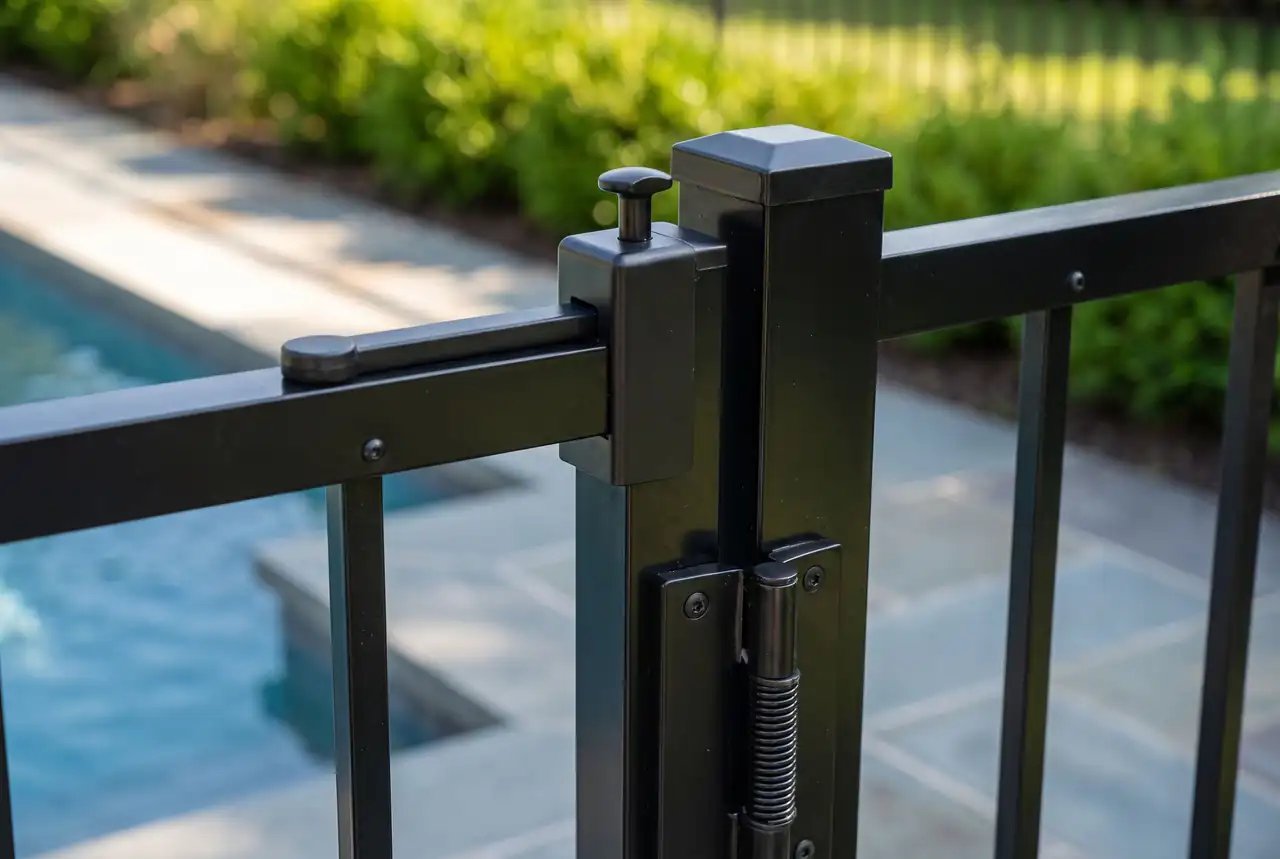
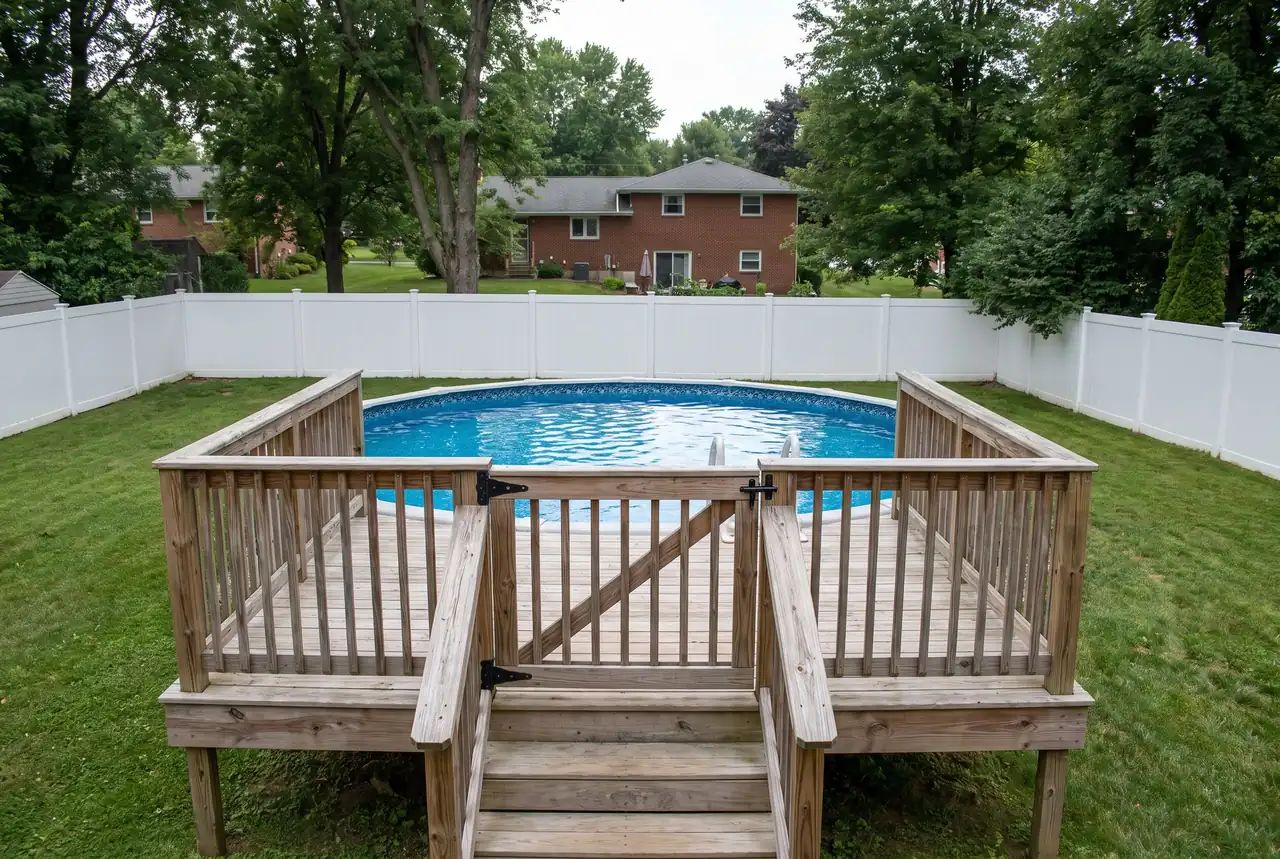
A deck built to the pool wall becomes part of the barrier. Its railing needs to meet the same opening rules as a fence, including the 4-inch sphere test, and the stair or entry gate must open outward from the pool, self-close and self-latch. If the latch release sits lower than 54 inches above grade, it belongs on the pool side, at least 3 inches below the top of the gate.
Pool covers are a separate question. A safety cover can add protection, but the barrier rules summarized here are written around walls, fences and gates, so do not count on a cover to replace them unless your inspector confirms it.
When is a separate fence the better answer?
When the wall is short in places, when the deck layout is complicated, or when you want the yard around the pool closed off from the rest of the property.
| Setup | Wall as barrier works when | Add a fence when |
|---|---|---|
| Freestanding pool with ladder | Wall is 48 in+ all around and ladder is removable or lockable | Grade is uneven or the ladder is fixed |
| Pool with partial deck | Deck railing and gate meet barrier rules | The deck leaves gaps between railing and wall |
| Pool with wraparound deck | Railing, stairs and gate all meet barrier rules | Deck stairs reach the yard without a gate |
| Pool near the house | House doors are not part of the barrier | House doors open into the pool area and need alarms or protection |
A fence around an above-ground pool follows the same numbers as any pool fence: 48 inches minimum, no 4-inch openings, bottom gap no more than 2 inches over soil, and gates that open outward and latch themselves. Full details are in our PA pool fence code guide.
Do you need a permit for an above-ground pool fence?
Often, yes. Westtown requires a permit for any pool enclosure fence, and townships such as West Goshen and Thornbury permit every fence.
The pool itself may also need a permit depending on its size and the township, so ask about both at once. When you hire 76 FENCE West Chester, we file the fence permit and check what the inspector will want to see. Our pool fence and aluminum fence pages show suitable designs, and the pool fence cost guide covers pricing references. Local details are on our Westtown and West Goshen pages, and permit rules by township are in our permit guide.
Walk the fence line with us.
A free on-site estimate in West Chester, PA and the surrounding townships. We check the rules for your street, handle the permit and HOA paperwork, and call PA One Call before we dig.
Rules change, so confirm with the township — when you hire us, we pull the permit.
Sources & references
- Amity Township — 2018 ISPSC Section 305 barrier handout
- Westtown Township Code § 170-1505
- Westtown Township Code § 170-1611
Codes and ordinances change. This page is general information, not legal advice; confirm requirements with your municipality.