Short answer: Yes, a fence can be installed on a slope in West Chester, PA. It is either stepped, with level panels dropping at each post, or racked, with panels that tilt to follow the ground. Racking keeps the bottom tight for pets and pools; stepping suits rigid privacy panels. Steep grades and pool barriers need extra planning and a check of local height rules.
Rolling ground is part of the charm around West Chester, PA. Yards fall toward the Brandywine, drop off behind townhome rows, and climb toward ridges in the townships. A fence has to deal with that grade gracefully, and the method chosen affects looks, gaps, cost and code compliance.
What is the difference between stepped and racked fences?
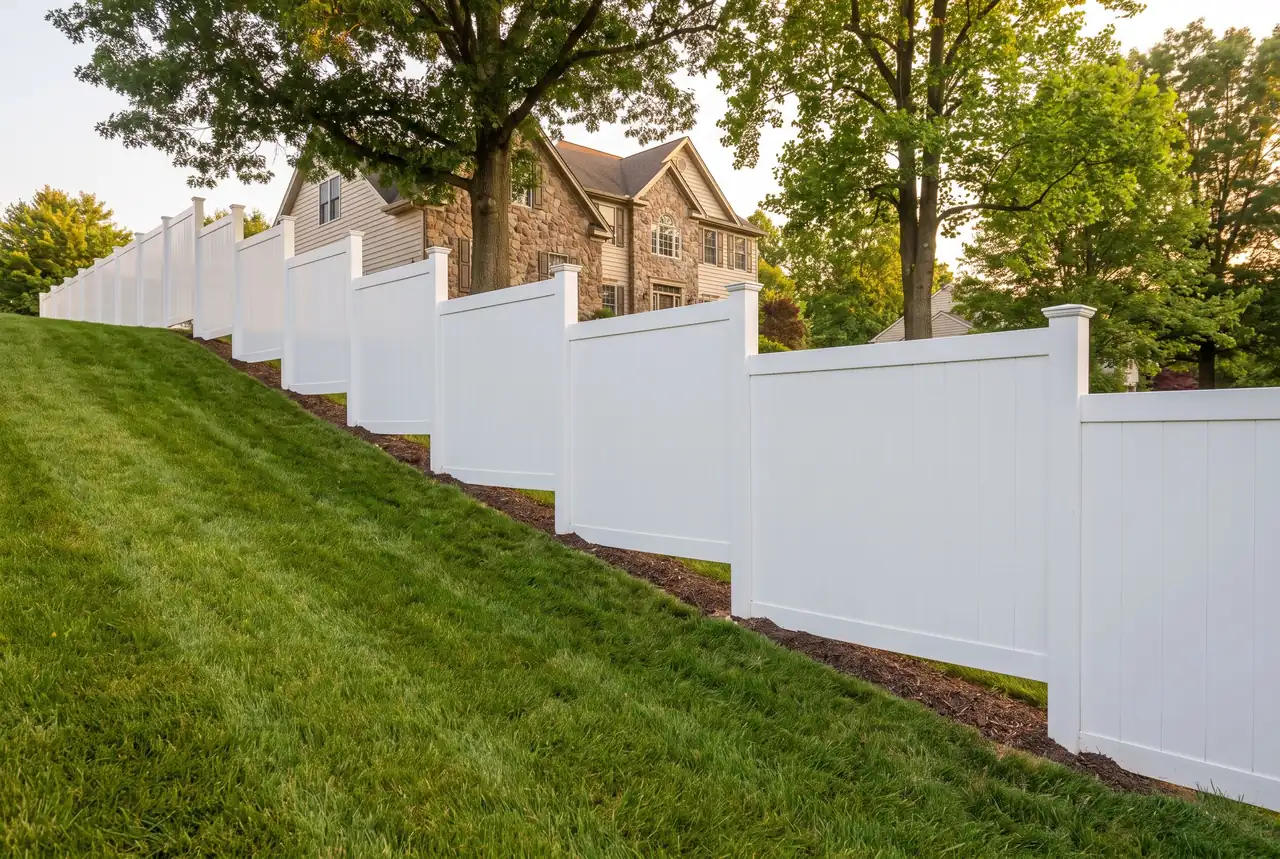
A stepped fence keeps each panel level and drops it at every post, like a staircase. A racked fence keeps the rails parallel to the ground, so the whole fence follows the slope.
| Stepped | Racked | |
|---|---|---|
| Look | Level tops in a stair pattern | Smooth line that follows the ground |
| Bottom gaps | Triangular gaps under each panel | Even, small gap along the grade |
| Best materials | Vinyl privacy, solid panels | Aluminum, steel, wood built on site, chain link, split rail |
| Pets and pools | Gaps need filling or a bottom board | Usually easier to keep tight |
- Two methods: stepped (level panels) or racked (panels follow the grade).
- Height on slopes: some codes measure from a specific grade point; Kennett Township measures from the highest adjacent grade.
- Pool barriers: 48 inches minimum, measured on the side away from the pool, with tight bottom-gap limits.
- Steep ground: many townships have steep-slope rules; check before grading or terracing.
- Before digging: PA One Call, 3 to 10 business days ahead.
Which fence materials follow a slope best?
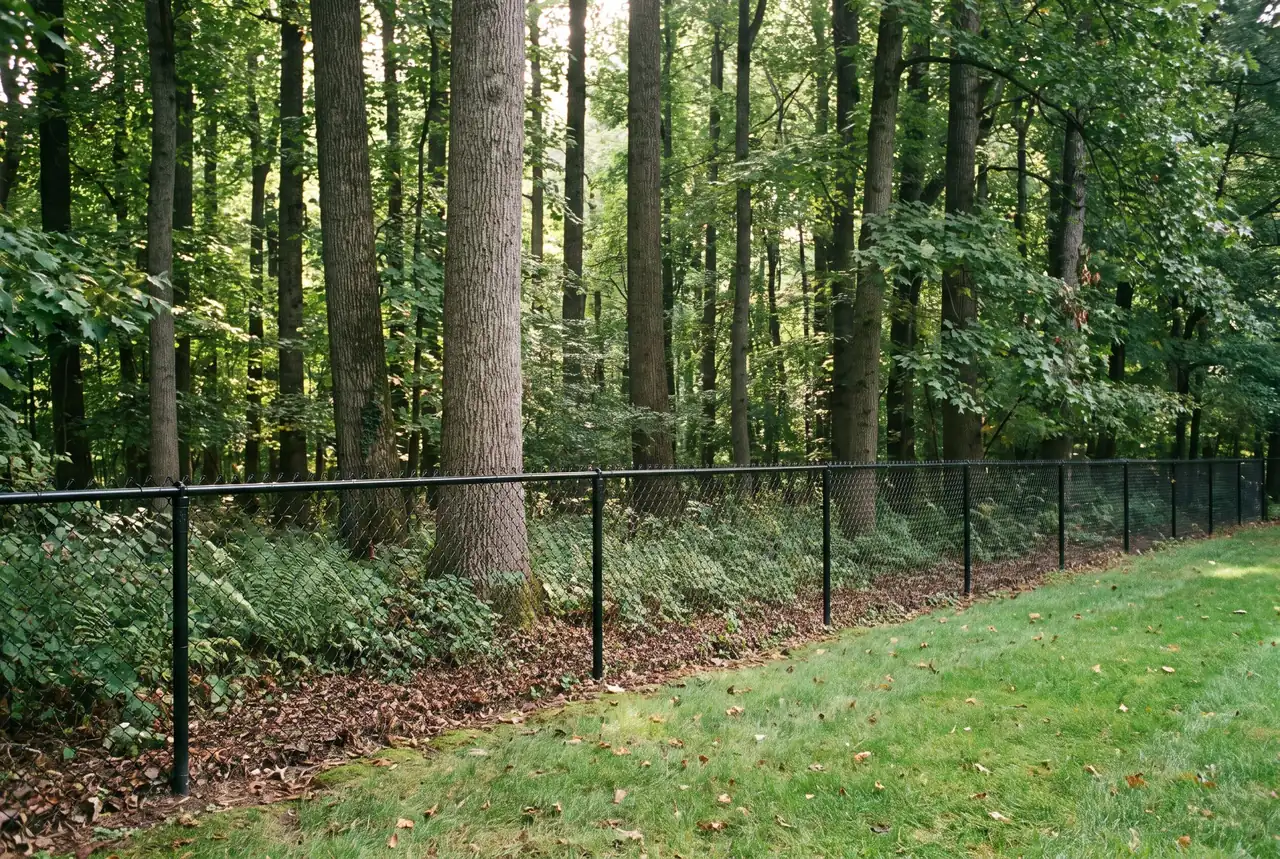
Metal and site-built wood are the most flexible. Many aluminum and ornamental steel panels are made to rack within a set range, so they can follow a moderate grade cleanly. Wood fences built rail by rail can be cut to almost any angle. Chain link follows the ground naturally, and split rail is so open that the grade hardly matters.
Vinyl privacy panels are the least forgiving. Most are built square and need to be stepped, though some lines offer rackable versions. On a steep yard, stepping vinyl creates noticeable height jumps at each post, which some homeowners like and others do not. See aluminum and vinyl for more on each.
How do you fill the gaps under a stepped fence?
There are three common approaches: add a rot-resistant bottom board or trim piece that follows the ground, set the panels lower on the uphill side and accept a slightly taller look, or reshape the soil under each panel so the gap shrinks. For dogs that dig or squeeze, filling those triangles matters as much as the fence height; our dog fence guide covers this in detail.
How is fence height measured on a slope?
It depends on the municipality. Kennett Township, for example, measures fence height from the highest adjacent grade. Other codes are less specific. On a stepped fence, the tall end of each panel can exceed a limit even when the uphill end does not, so the measuring point matters if you are near a 4-foot front-yard cap or a 6-foot rear cap. This is one reason we confirm the rule with the township before ordering panels.
What about pool fences on a slope?
Pool barriers need extra care. Under the 2018 ISPSC, which Pennsylvania’s Uniform Construction Code adopts, the barrier top must be at least 48 inches above grade measured on the side away from the pool, and the gap at the bottom can be no more than 2 inches over a non-solid surface such as lawn or mulch.
A stepped fence on a slope can easily open gaps bigger than that. Racked aluminum is usually the cleanest solution, sometimes with a concrete or stone curb under the fence line. Our PA pool fence code guide walks through every requirement.
Are there rules about building on steep slopes?
Many townships around West Chester have steep-slope protections that limit grading and disturbance, though the details vary and we have not confirmed each ordinance. A fence that simply follows the existing ground typically disturbs little soil. If your plan involves retaining walls, terraces or regrading to level the line, check with the township first.
Does a slope change how posts are set?
Somewhat. Posts on a hillside are set plumb, not perpendicular to the ground, and each one is measured to its own grade so the line stays true. On the downhill side, soil can be thinner over rock, and runoff tends to follow the fence line. Crowning the concrete and keeping downspouts away from posts helps footings last. On racked metal fences, the panel’s racking limit decides how closely posts must follow changes in grade.
Where are sloped yards most common near West Chester?
Hillsides along the Brandywine in East Bradford and Pocopson, wooded lots in Birmingham, and newer subdivisions built into ridges all bring grade into play. Combine slope with rocky schist, and each post location gets more thought than usual.
A walkthrough is the best way to choose. We look at the grade along the full line, check where water flows, and match a method and material to the use. Rules change, so confirm with the township — when you hire us, we pull the permit.
Walk the fence line with us.
A free on-site estimate in West Chester, PA and the surrounding townships. We check the rules for your street, handle the permit and HOA paperwork, and call PA One Call before we dig.
Sources & references
- 2018 ISPSC Section 305 pool barrier summary (Amity Township handout)
- Kennett Township fence permit information
- PA One Call System — User Guide
Codes and ordinances change. This page is general information, not legal advice; confirm requirements with your municipality.