Short answer: Pennsylvania has a partition-fence law, in Title 29 of Purdon’s Statutes, under which adjoining owners must build and maintain an equal part of a line or division fence, with county surveyors acting as “fence viewers” in disputes. It grew out of farm country, and how far it reaches a suburban lot in West Chester, PA is unclear, so treat it as background and ask an attorney before relying on it.
Homeowners sometimes hear that a Pennsylvania neighbor “has to pay half” of a fence. That idea traces back to the state’s partition-fence statutes, written for an agricultural Pennsylvania where line fences kept livestock in. This page explains what the law says, what fence viewers are, and why most backyard fence questions around West Chester are settled by agreement rather than by this statute.
- Where it lives: Title 29, Purdon’s Pennsylvania Statutes, as compiled by the National Agricultural Law Center.
- Core duty: adjoining owners must “erect and maintain an equal part” of line or division fences.
- Fence viewers: county surveyors serve as fence viewers in disputes; the statute sets their fee at up to $25.
- Scope: historically agricultural; its application to suburban residential lots is limited and unsettled.
- Practical step: a written agreement with your neighbor, and legal advice if money is in dispute.
What are fence viewers in Pennsylvania?
Fence viewers are officials who settle disputes between neighbors over a shared division fence. Under the Pennsylvania statute, county surveyors fill that role.
Historically, if one farmer believed a neighbor was not keeping up his half of a line fence, the fence viewers could view the fence, decide what was owed, and set the division of the work. The fee written into the statute is small, up to $25, which itself shows how old the law is. Few homeowners today will ever deal with a fence viewer, but the term still turns up in searches and in neighbor arguments.
Is the law still in force? The provisions appear in current compilations of Pennsylvania fence law, but whether and how a court would apply them to a given property depends on facts we are not in a position to judge. That is why we describe them here as context, not as a rule you can enforce on your own.
Does your neighbor have to pay half of a fence in Pennsylvania?
Not as a general rule for suburban homes. The equal-share duty comes from a farm-era partition-fence law whose reach into residential neighborhoods is limited.
Most residential fences around West Chester are built by one owner, on that owner’s land, for that owner’s purposes: privacy, a dog, a pool. In that situation the owner pays and owns the fence. If you want a neighbor to share the cost, the reliable path is agreement, ideally written, covering who pays what, where the fence sits, which side faces out and who maintains it. If a neighbor refuses and the amount at stake is large, an attorney can tell you whether the partition-fence statutes have any bearing on your property.
Where the old law still feels at home
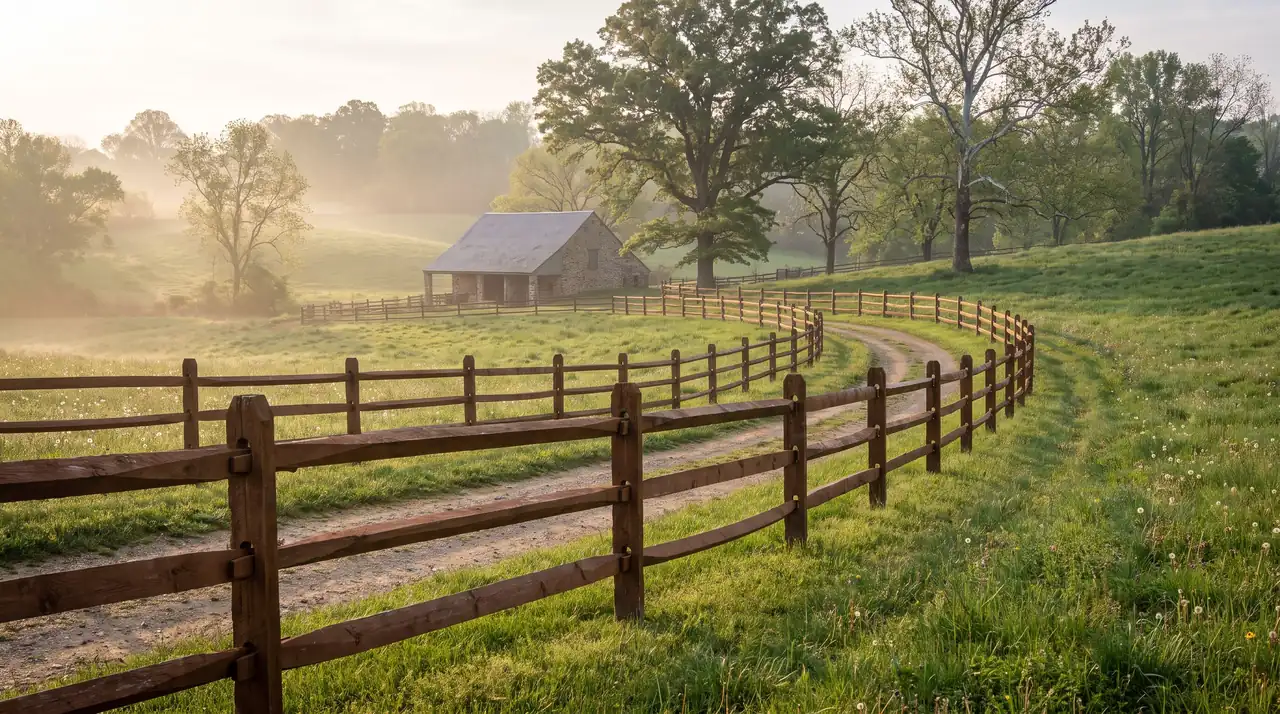
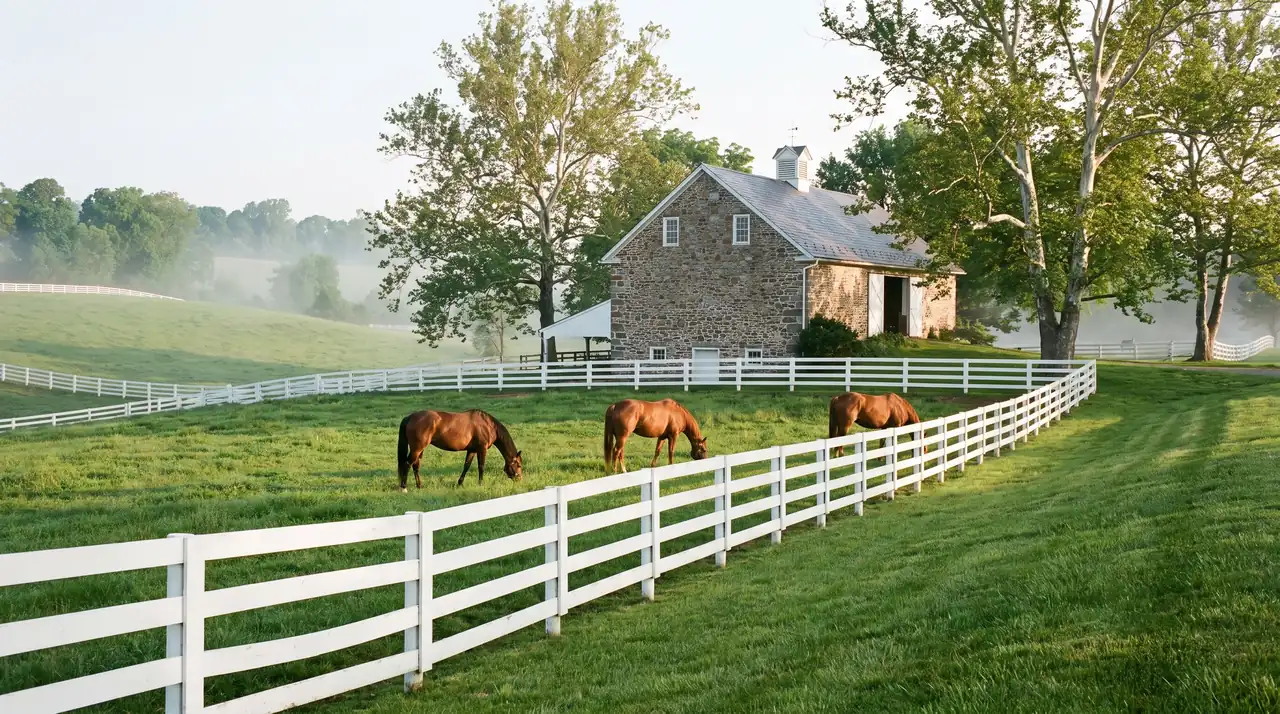
On horse properties and working farms in Pocopson, West Bradford and the hunt country west of the borough, line fences between pastures still matter the way the statute imagined. West Bradford’s code, for example, requires grazing and pasture areas to be fenced (§ 450-62I(2)). Owners of adjoining pastures often already share fence work by long habit.
How do partition-fence rules compare with township fence rules?
They answer different questions: the state law deals with sharing the duty for a division fence, while township codes deal with permits, height and placement.
| Question | Partition-fence law (state) | Township zoning code |
|---|---|---|
| Who builds and maintains a line fence? | Adjoining owners, an equal part each (historically agricultural) | Silent; the owner who builds it |
| Who resolves disputes? | Fence viewers (county surveyors) | Zoning officer, on code compliance only |
| How tall, how close, which side out? | Not addressed | Set locally, for example Thornbury’s 6-inch setback and good-side-out rule |
| Is a permit needed? | Not addressed | Yes in many townships, such as West Goshen for every fence |
What should neighbors do instead?
Agree in writing before the fence goes up. It costs nothing and prevents nearly every dispute the statute was written to settle.
- Confirm the line. Find the pins or hire a licensed surveyor; see survey before a fence.
- Decide placement. On the line where the township allows it, or just inside one owner’s land; see fence property line rules.
- Agree on money and upkeep. Who pays, who repairs storm damage, who stains or washes it.
- Sign it. A short signed note is better than a handshake if either home is later sold.
Does this apply to twins and rowhomes in the borough?
The statute was not written with attached houses in mind, and fence questions between twins are usually about ownership and access rather than a duty to share.
Our guide to shared fences for twins and rowhomes covers those situations. For pasture and farm fencing, see horse fencing and split rail fences, and for local context, our Pocopson and West Bradford pages. 76 FENCE West Chester builds fences; for legal questions about a boundary or cost-sharing, consult a Pennsylvania attorney.
Walk the fence line with us.
A free on-site estimate in West Chester, PA and the surrounding townships. We check the rules for your street, handle the permit and HOA paperwork, and call PA One Call before we dig.
Sources & references
- National Agricultural Law Center — Pennsylvania fence law
- West Bradford Township Code
- Thornbury Township Code, Chapter 76
Codes and ordinances change. This page is general information, not legal advice; confirm requirements with your municipality.