Short answer: For West Chester, PA weather, aluminum and vinyl are the lowest-maintenance choices, coated chain link is the toughest per dollar, and cedar or pressure-treated wood suits buyers who accept regular upkeep. Every material lasts longer when posts are set below the local frost depth and water drains away from footings. The best pick depends on your priorities more than the climate.
Weather in West Chester, PA asks a lot of a fence. Winters swing above and below freezing, sometimes several times a week. Summers are humid, which encourages mildew and rot on shaded lines. Thunderstorms, remnants of tropical systems and ice storms bring wind and falling limbs. No material is immune, but some shrug off particular stresses better than others.
- Main stresses: freeze-thaw cycles, summer humidity and mildew, UV, wind and falling limbs.
- Typical lifespans (76 FENCE brand guidance): wood 15–20 years, chain link 15–20+, metal 20–30+, composite around 20.
- Frost depth: set by each municipality; references cite roughly 30 to 42 inches across Pennsylvania.
- Care: wash yearly; re-treat wood every 2–3 years; touch up metal every 3–5.
- Warranty: we offer and honor manufacturer warranty coverage on every fence we install.
What does Pennsylvania weather do to a fence?
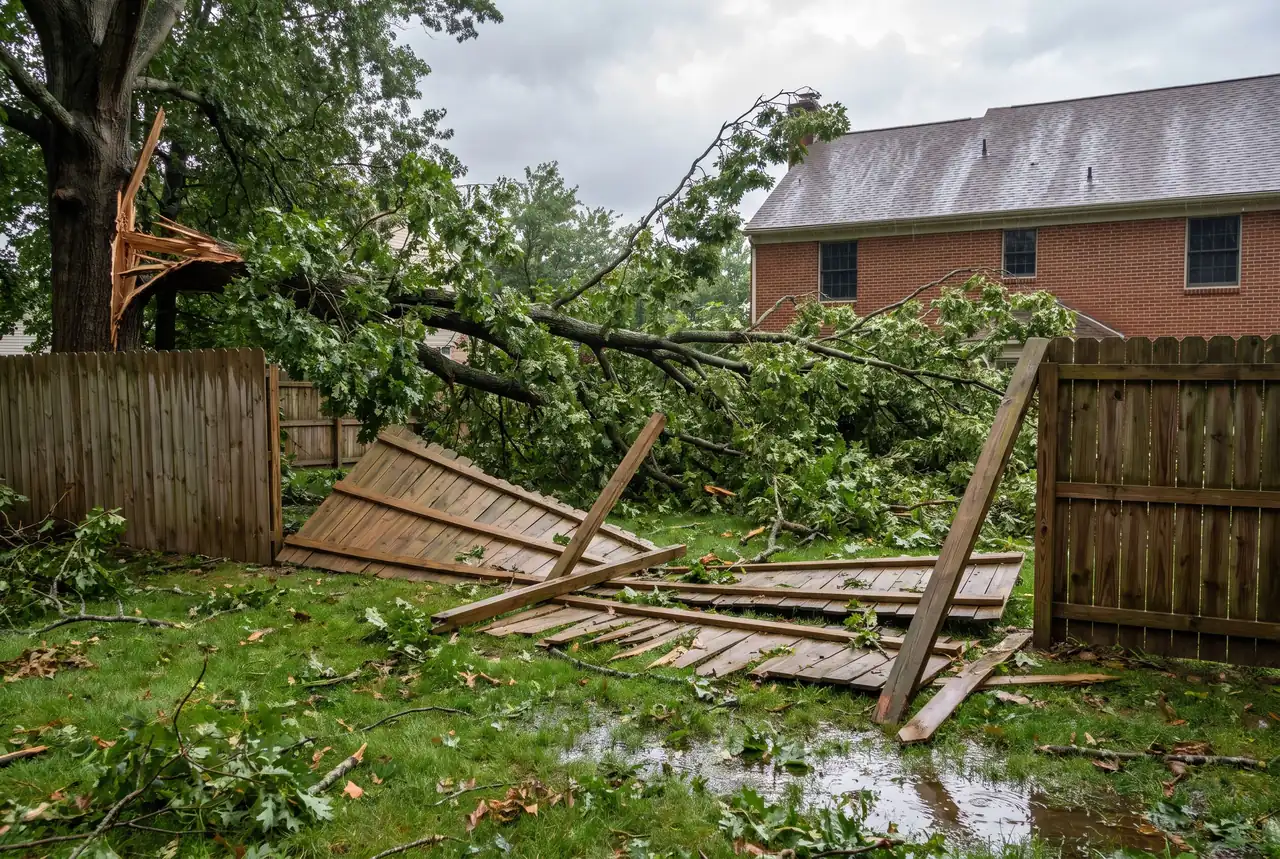
Mostly it works on the posts and the surfaces. Freeze-thaw cycles can lift posts that are set too shallow, a process called frost heave. Moisture feeds mildew on vinyl and rot in wood, especially on north-facing and shaded runs. Sun fades stains and some colors. Wind pushes hardest on solid privacy fences, and falling limbs do the most sudden damage.
How does each material hold up?
| Material | Freeze-thaw | Humidity and mildew | Wind and impact | Upkeep |
|---|---|---|---|---|
| Vinyl | Good; less flexible in hard cold | Will not rot; mildew washes off | Solid panels catch wind; sharp cold impacts can crack | Low |
| Pressure-treated pine | Good if posts are deep enough | Treatment resists rot; needs re-treating | Strong; boards replace easily | Moderate to high |
| Cedar | Good | Naturally rot-resistant; grays without stain | Lighter; boards replace easily | Moderate |
| Aluminum | Very good | Will not rust | Open design lets wind pass | Very low |
| Coated chain link | Very good | Coating resists rust | Open; flexes under impact | Very low |
| Composite | Good | Resists rot; can collect mildew | Heavy panels; solid profile | Low |
Does vinyl fence crack in cold winters?
Not from cold alone. Vinyl becomes stiffer in hard cold, so a sharp impact, such as a snowblower chute, a thrown chunk of ice or a car door, is more likely to crack it in January than in July. A properly installed vinyl fence handles normal Pennsylvania winters well. Leaving a little space between the fence and where you pile snow avoids most winter damage. See vinyl fencing.
How long does a wood fence last in Pennsylvania?
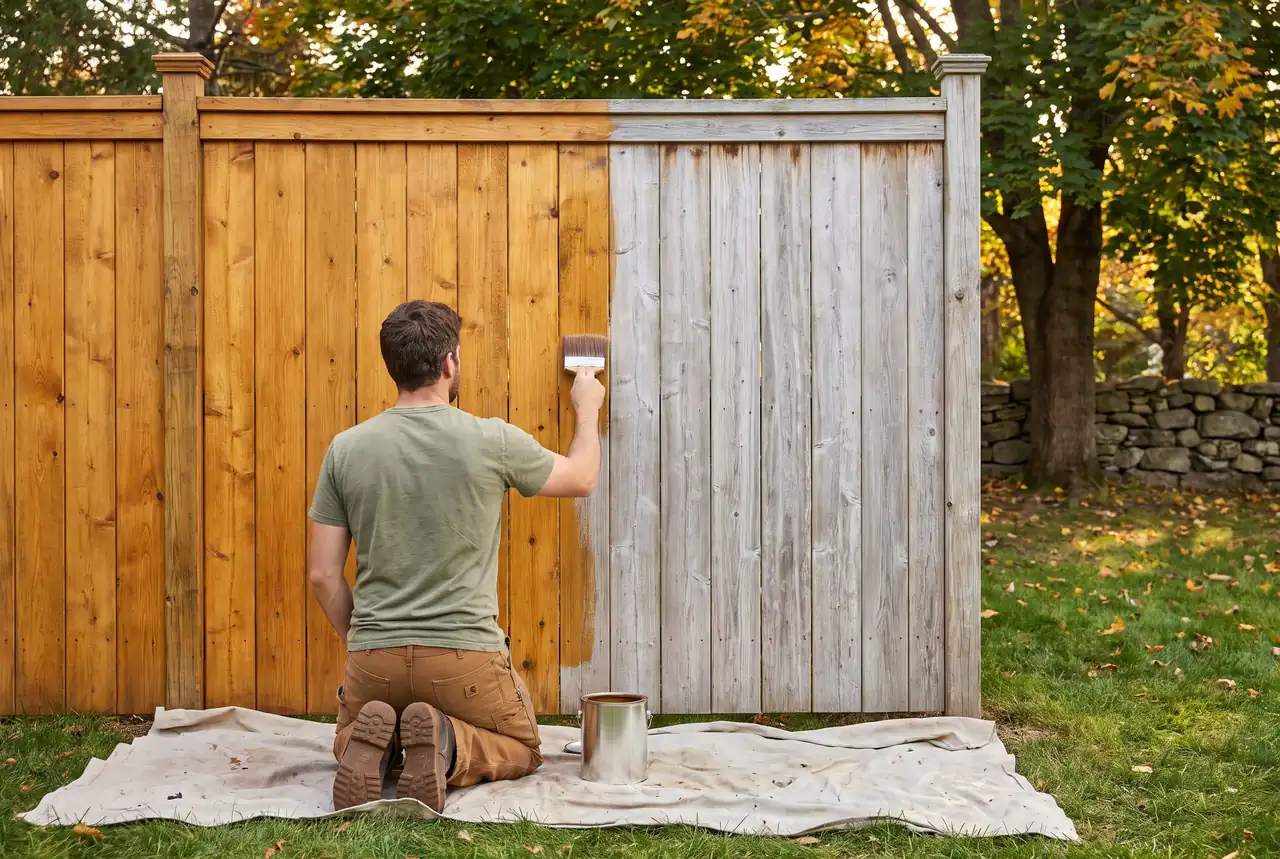
Typically 15 to 20 years, by 76 FENCE’s general guidance, with re-treating every two to three years. Lifespan depends heavily on exposure. A cedar fence in full sun with good drainage can outlast a pine fence in a damp, shaded side yard by years. Keeping soil, mulch and leaves off the bottom boards is one of the simplest things you can do. Our cedar page compares cedar with pressure-treated pine.
Why does post depth matter so much here?
Because frost heave is the main way Pennsylvania weather defeats a fence. When saturated soil freezes, it expands and can jack a shallow post upward a little each winter. Over several years, that shows up as leaning sections, gaps under gates and latches that no longer line up. Pennsylvania lets each municipality set its frost depth, and figures in the 30 to 42 inch range appear around the state; one reference cites about 30 inches for the Philadelphia area. We confirm the requirement locally. Our post depth guide explains more.
Which fence handles wind best?
Open fences. Aluminum, ornamental steel, chain link, picket and split rail let wind pass, so they rarely blow over. Solid privacy fences act like a sail, which puts heavy loads on posts during storms. If you want privacy in an exposed spot, such as a hilltop lot in Thornbury or open ground in East Goshen, shadowbox or semi-privacy designs that leave small gaps reduce that load while still blocking most views.
Which is better long-term: vinyl or wood?
It depends on how you value time versus upfront cost. For general reference, HomeGuide’s 2026 cost guide puts installed wood at roughly $20 to $50 per foot and vinyl at roughly $30 to $60 per foot nationally. Wood usually costs less to start but needs re-treating every few years; vinyl costs more to start but mostly needs a wash. Local quotes depend on your yard, and a free estimate gives a real number. Our vinyl vs. wood comparison goes deeper.
What is the most weather-proof fence overall?
Aluminum comes closest for most homeowners: it does not rust, rot or need staining, and its open design lets wind through. Its limitation is privacy. If privacy matters, vinyl is the low-maintenance alternative, provided posts are set deep and the line is kept clear of snow piles and impacts. Whatever you choose, an annual walk-around catches small problems early; see our maintenance calendar.
Walk the fence line with us.
A free on-site estimate in West Chester, PA and the surrounding townships. We check the rules for your street, handle the permit and HOA paperwork, and call PA One Call before we dig.
Sources & references
Codes and ordinances change. This page is general information, not legal advice; confirm requirements with your municipality.