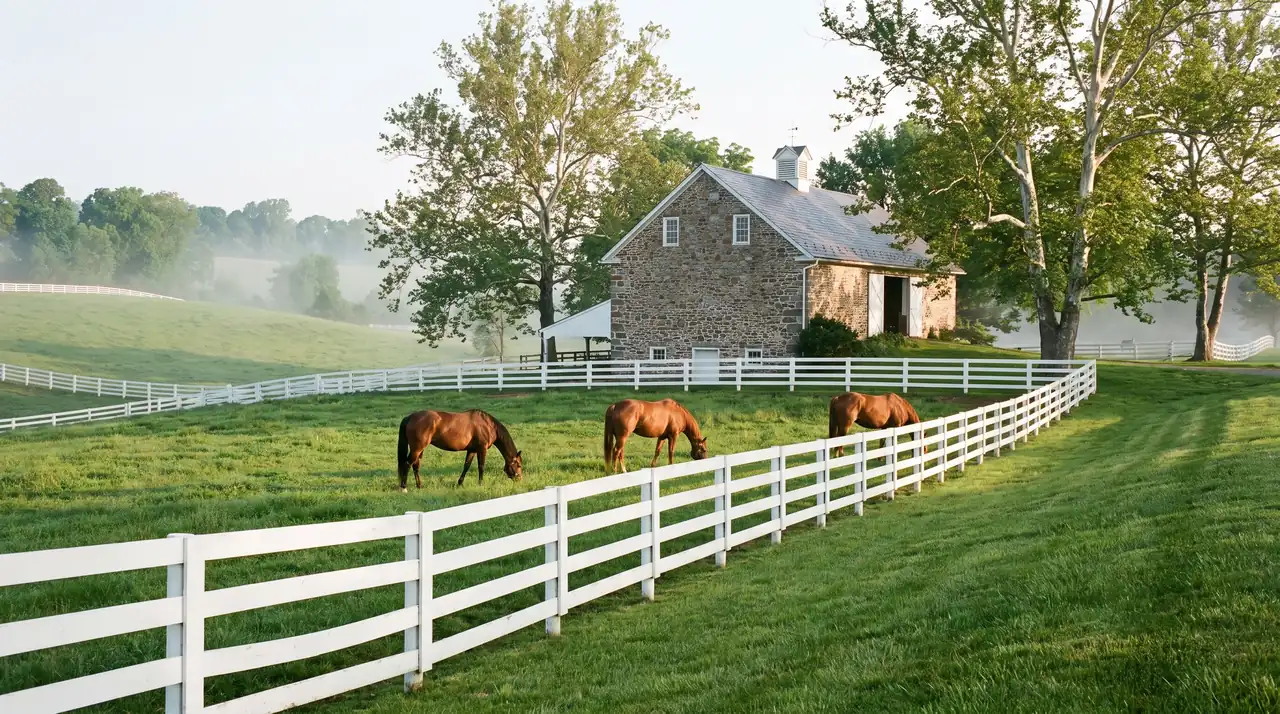
Short answer: Around West Chester, PA, choose board fencing for horse paddocks and pastures where animals lean, push and need a highly visible barrier. Choose split rail for boundary lines, open frontage and a period farm look, adding welded wire mesh when you need to hold a dog. HomeGuide puts split rail at $15–$25 per installed foot nationally, or $35–$40 with mesh.
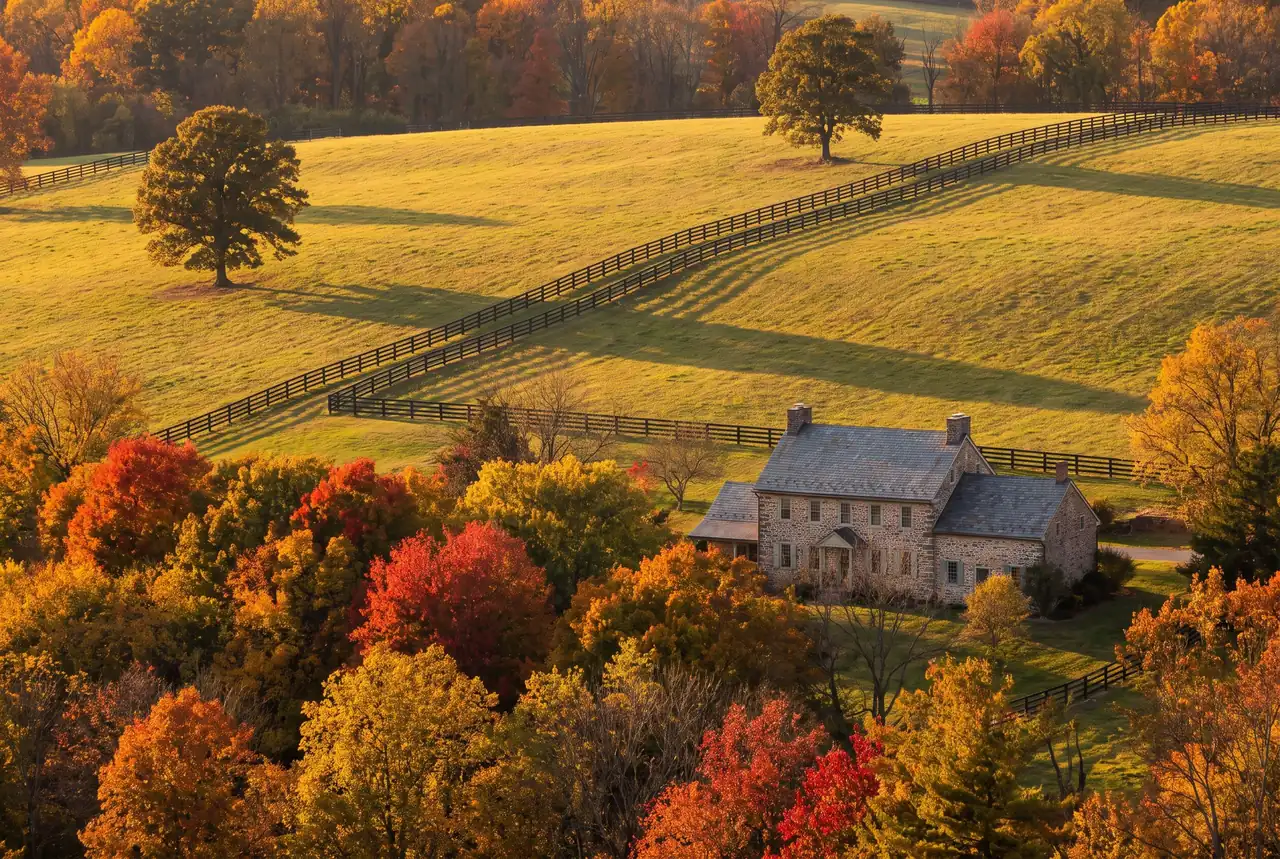
The rolling land west and south of West Chester, PA, from East Bradford’s Brandywine frontage to Pocopson’s horse farms and the battlefield-era farmhouses of Birmingham and Thornbury, is classic split rail and board fence country. The two look related, but they do different jobs. This page from 76 FENCE West Chester compares them on cost, strength, animal containment and local rules, then gives a clear recommendation by use.
What is the difference between split rail and board fencing?
Split rail uses rough rails slotted into mortised posts with no fasteners; board fencing nails or screws milled boards to the face of square or round posts.
Split rail, usually in two or three rails, is quick to install, follows rolling ground well and reads as rural and historic. Board fencing, typically three or four boards high and often painted white or black, is stiffer, more uniform and more visible to animals. Both can be built in wood, and board styles are also available in vinyl. See our split rail and horse fence pages for styles.
How do they compare?
| Factor | Split rail | Board fence |
|---|---|---|
| Published installed cost | 2-rail $15–$20; 3-rail $20–$25; with wire mesh $35–$40 per ft (HomeGuide split rail, 2026) | No single published range we cite; varies with board count, species, vinyl vs. wood and paint |
| Horse containment | Fair for calm horses; rails can be pushed out of posts | Better; boards fastened to posts, more visible |
| Dogs | Only with wire mesh added | Only with wire mesh added |
| Slopes | Follows rolling ground easily | Follows grade; needs more fitting on sharp changes |
| Look | Rustic, historic | Formal estate or hunt-country look |
| Upkeep | Replace broken rails | Re-fasten boards; repaint if painted |
Costs are national figures, not 76 FENCE prices. Local quotes depend on the land.
- Split rail cost: $15–$25 per ft, or $35–$40 with mesh (HomeGuide, 2026, national).
- Typical wood lifespan: 15–20 years (76 FENCE guidance).
- Pastures: West Bradford’s code says grazing and pasture areas shall be fenced (§ 450-62I(2)).
- Streams: East Bradford and Chadds Ford bar new construction within 50 ft of the top of bank in riparian buffer areas.
- Permits: Pocopson requires permits for fences and walls; rules vary by township.
Which is better for horses?
Board fencing, in most cases. It is more visible, harder to push apart, and holds up better to leaning and rubbing.
Horses test fences by leaning over them, scratching on them and occasionally running into them. A well-built three- or four-board fence gives them a clear visual line and fastened rails that do not slide out. Split rail can work for quiet horses in large fields, but a determined horse can work a rail loose from its mortise. On hunt-country properties, a black three-board fence is a common choice because it ages well against stone barns and green fields. Gates on these properties are often sized for tractors and trailers; see gate installation.
What local conditions change the cost?
Rock, slope, creeks and preserved-land restrictions.
Long rural runs multiply every post-setting problem. In the schist uplands, rock in post holes slows installation; see rocky soil and fence posts. Near the Brandywine and its tributaries, riparian buffers and floodways can limit where fence lines go, and fences that trap debris in a floodway are a concern; see fences near streams. On land under a conservation easement, the easement document may restrict new fencing, so read it before planning; see conservation easement fencing. At corner lots, West Bradford limits anything over 2½ ft inside a sight triangle with 75-ft legs.
How long do they last, and what upkeep do they need?
Wood versions of both typically last 15–20 years with care, per 76 FENCE’s guidance. Upkeep differs in kind more than in amount.
Split rail has no fasteners, so maintenance is mostly replacing a rail that cracks or rots and resetting a post heaved by frost. Board fences need periodic checks for loose boards, especially where horses lean, and painted board fences need repainting on a regular cycle, which is a real cost on a long pasture line. On both, keep grass and brush trimmed along the bottom so moisture does not sit against the wood, and check gates and hinges each season. See the maintenance calendar.
Which should you choose?
Horse paddock or pasture
Board fence. Fastened, visible and sturdier against leaning. Add mesh if foals or small animals share the field.
Boundary or open frontage
Split rail. Marks the line, keeps views open and suits farmhouses and battlefield-era properties.
Dog yard on a rural lot
Split rail with welded wire mesh. Keeps the open look while holding most dogs. See dog fences.
Estate entrance
Board fence, usually painted black or white, often paired with an automatic gate.
How do you plan a farm or estate fence?
Start with a free on-site walkthrough. Our team walks the line, notes creeks, slopes and rock, checks township and easement constraints, and quotes both options where both make sense. Local detail is on our Pocopson and Birmingham pages. Financing through Wisetack is available, subject to credit approval.
Walk the fence line with us.
A free on-site estimate in West Chester, PA and the surrounding townships. We check the rules for your street, handle the permit and HOA paperwork, and call PA One Call before we dig.
Sources & references
- HomeGuide: Split rail fence cost (2026)
- West Bradford Township zoning (§ 450-61, § 450-62)
- East Bradford Township: Fences
- Chadds Ford Township zoning
Codes and ordinances change. This page is general information, not legal advice; confirm requirements with your municipality.